
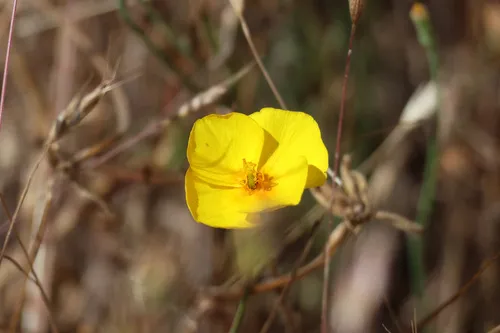
Mexican Tulip Poppy Hunnemannia fumariifolia
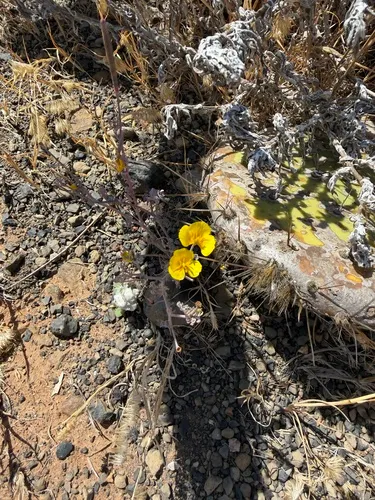
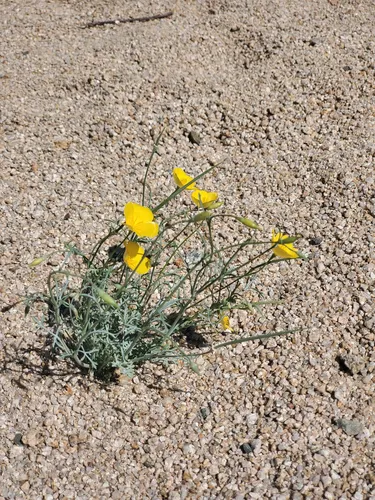
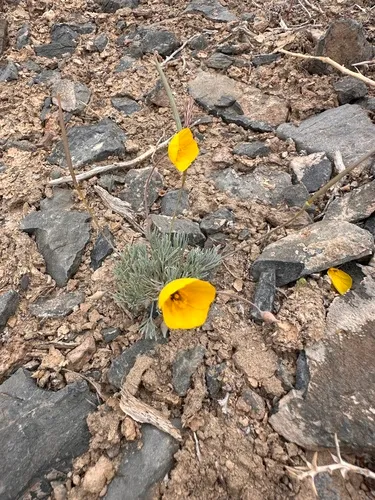
Mexican Tulip Poppy is an introduced perennial shrub, found in Hawaii and the lower 48 states.
More about this plant
Hunnemannia is a monotypic genus of flowering plants in the poppy family Papaveraceae, containing the single species Hunnemannia fumariifolia native to the highlands of Mexico. It is typically found at elevations of 1,500–2,000 m (4,921–6,562 ft) in the Chihuahuan Desert and south into central Mexico, where it favors rocky habitats, occurring along roadsides as well. Wikipedia →
Mexican Tulip Poppy is flagged invasive in the U.S. These natives fill a similar niche — same growth habit, bloom season, height, and region — so you keep the look and feed local wildlife instead of spreading a problem.
Growing & care
USDA PLANTS · TRY- Hardiness
- ≥ zone 11 derived from its U.S. range
- Lifespan
- Perennial
- Flower colour
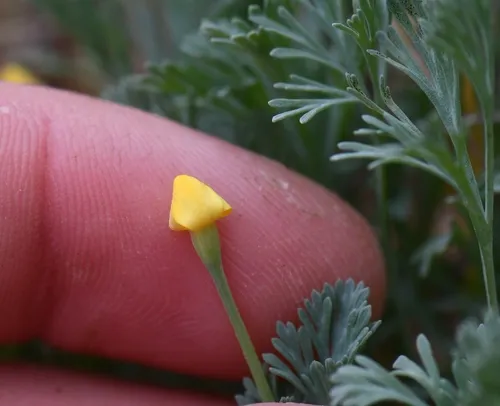
- Yellow AI AI image-analysis of community-science photos (~87% expert agreement) — not a botanical record
Related plants
More Hunnemannia →
How we know this (2) Methods & honest limits
A recorded categorical fact: each species is tagged C3 (standard), C4 (heat/water-efficient) or CAM (succulent, night-time CO₂ uptake) — or a facultative combination. We only show a trait card for the noteworthy C4/CAM cases; C3 is the unremarkable majority, kept in the data but not surfaced as a card.
McKenzie et al. assigned each species a flower colour with a GPT-4V vision model over iNaturalist photos. We use the confident tier plus a separately-labelled lower-confidence top-up (mostly inconspicuous green/brown flowers), and render it as a small tint — never as an asserted fact, and kept out of the written synopsis.
Honest limits: AI image inference (~87% expert agreement on the confident tier); a decorative, confidence-tiered indicator, not a measured trait.
Sources for this entry (12) Open & cited
Cite this page Open data, please attribute
PlantKey’s data is open under CC BY-SA 4.0 — free to reuse and adapt, with attribution and the same licence. Photos keep their own per-image licence + credit (see Sources above).
Loading…
BibTeX
Loading…