
Goldenseal Hydrastis canadensis
Goldenseal is a perennial wildflower native to Canada and the lower 48 states. It blooms Apr – May.
More about this plant
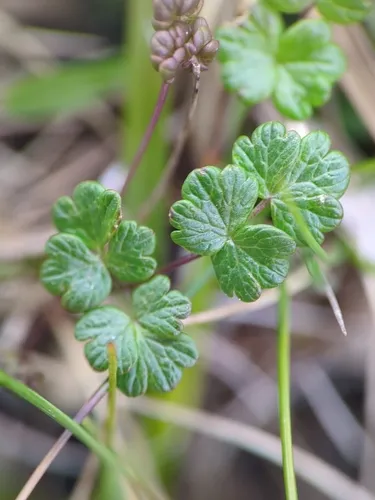
Goldenseal, also called orangeroot or yellow puccoon, is a perennial herb in the buttercup family Ranunculaceae, native to North America. It may be distinguished by its thick, yellow knotted rootstock. The stem is purplish and hairy above ground and yellow below ground where it connects to the yellow rhizome. Goldenseal reproduces both clonally through the rhizome and sexually, with clonal division more frequent than asexual reproduction. It takes between 4 and 5 years for a plant to reach sexual maturity, i.e. the point at which it produces flowers. Plants in the first stage, when the seed erupts and cotyledons emerge, can remain in this state one or more years. The second vegetative stage occurs during years two and three and is characterized by the development of a single leaf and absence of a well developed stem. Finally, the third stage is reproductive, at which point flowering and fruiting occurs. This last stage takes between 4 and 5 years to develop. Wikipedia →
Growing & care
USDA PLANTS · TRY- Hardiness
- ≥ zone 5 derived from its U.S. range
- Lifespan
- Perennial
Related plants
More Hydrastis →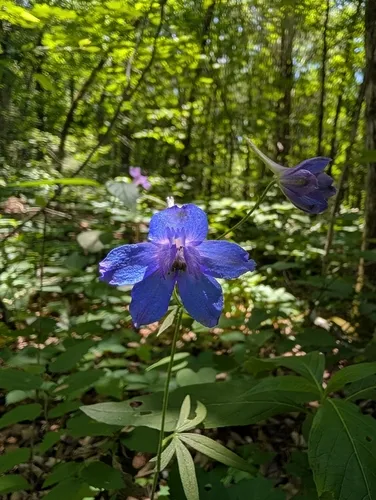
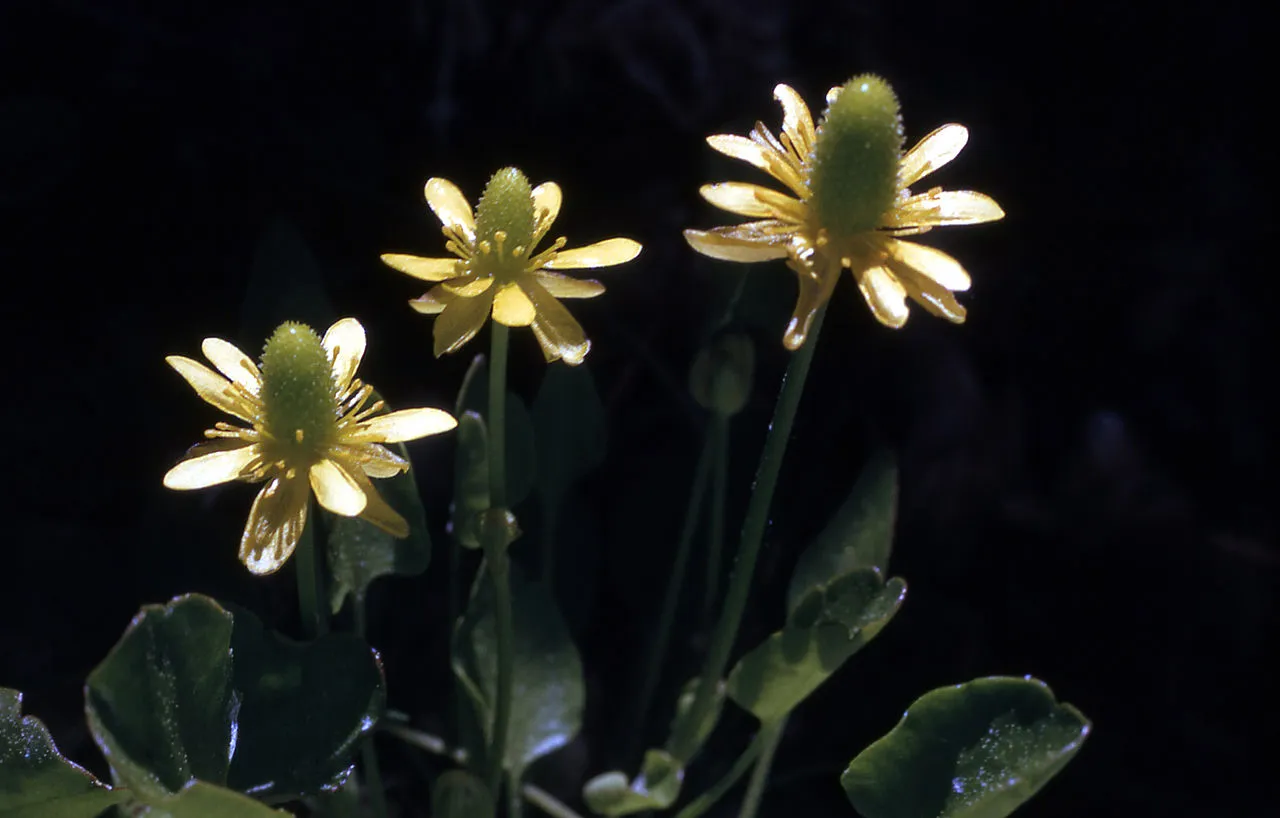
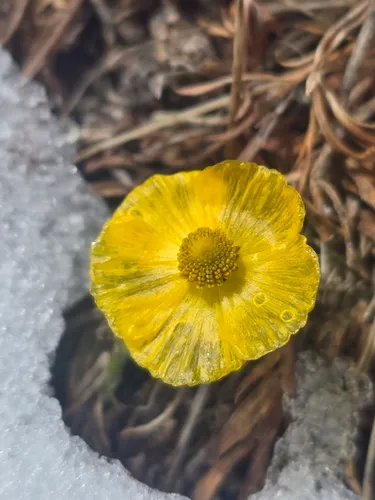
How we know this (1) Methods & honest limits
We take the plant’s U.S. county range and look up each county’s long-term climate, then summarise: native rainfall = the median annual rainfall across its counties; heat tolerance = the warm end (90th percentile) of average temperature across its range (mirroring how our cold-hardiness floor uses an extreme). Counties + medians blunt the roadside/observer bias that makes point-level climate unreliable. Needs at least five placeable counties.
Honest limits: A realized, sampling-biased niche (where it has been recorded, not its physiological optimum), and county climate is coarse — large Western counties span deserts and mountains. Derived guide, never a measured fact.
Sources for this entry (14) Open & cited
Cite this page Open data, please attribute
PlantKey’s data is open under CC BY-SA 4.0 — free to reuse and adapt, with attribution and the same licence. Photos keep their own per-image licence + credit (see Sources above).
Loading…
BibTeX
Loading…