
Oliver's Touch-me-not Impatiens sodenii
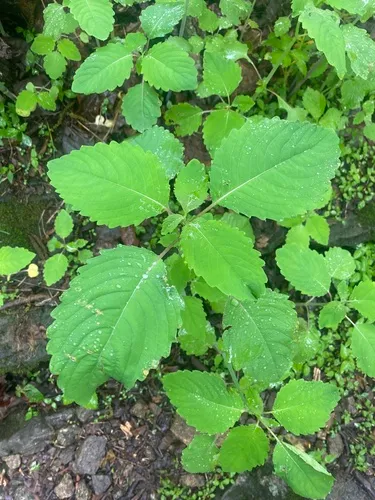
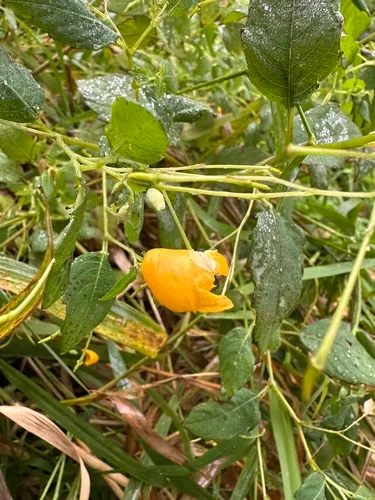
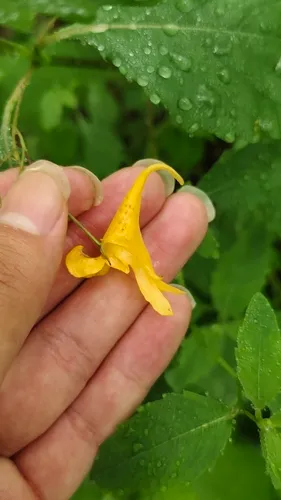
Oliver's Touch-me-not is an introduced perennial shrub, found in Hawaii. It grows to 4 ft.
More about this plant
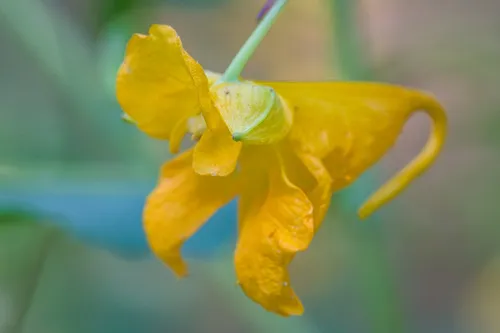
Impatiens sodenii is a species of flowering plant in the family Balsaminaceae known by the common names poor man's rhododendron, Oliver's touch-me-not, and shrub balsam. It is native to Kenya and Tanzania, and widely cultivated as an ornamental plant. Wikipedia →
Growing & care
USDA PLANTS · TRY- Height
- 4 ft
- Lifespan
- Perennial
- Flower colour
- Pink AI AI image-analysis of community-science photos (~87% expert agreement) — not a botanical record
Wildlife & pollinators
How pollinator value is scored →❧ Caterpillar hosts ~12 caterpillar species
Impatiens supports ~12 caterpillar species.
Native butterfly & moth caterpillars are the base of the terrestrial food web — most songbirds rear their young almost entirely on them. As a host for native Lepidoptera this is a moderate genus.
Recorded feeding on Impatiens in North America, including:


+ 8 more species → ↑ show fewer


✦ Bees 1 bee visitor
1 native & managed bee species is documented visiting Oliver's Touch-me-not :

Wildlife & visitors 5 birds · 2 nectaring
Open records of who else uses Oliver's Touch-me-not — a generalist food-web signal, kept separate from the keystone Ecological Value.
Recorded eaten by 5 birds species (fruit, seed, browse):


2 adult butterfly & moth species are recorded nectaring at its flowers:


Related plants
More Impatiens →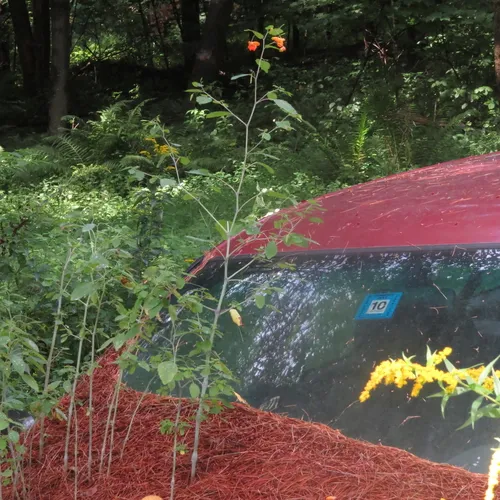
How we know this (1) Methods & honest limits
McKenzie et al. assigned each species a flower colour with a GPT-4V vision model over iNaturalist photos. We use the confident tier plus a separately-labelled lower-confidence top-up (mostly inconspicuous green/brown flowers), and render it as a small tint — never as an asserted fact, and kept out of the written synopsis.
Honest limits: AI image inference (~87% expert agreement on the confident tier); a decorative, confidence-tiered indicator, not a measured trait.
Sources for this entry (18) Open & cited
Cite this page Open data, please attribute
PlantKey’s data is open under CC BY-SA 4.0 — free to reuse and adapt, with attribution and the same licence. Photos keep their own per-image licence + credit (see Sources above).
Loading…
BibTeX
Loading…