
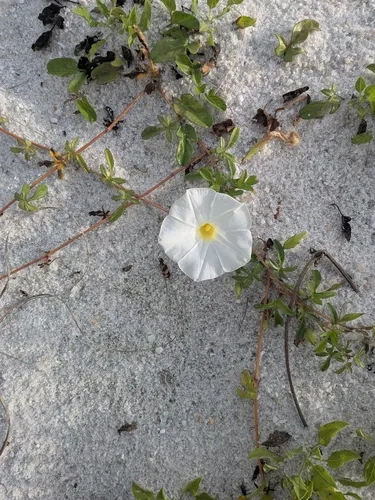
Wright's Morning-glory Ipomoea wrightii
Wright's Morning-glory is an introduced annual vine, found in the lower 48 states, Puerto Rico, and the U.S. Virgin Islands. It blooms Jul – Oct.
More about this plant
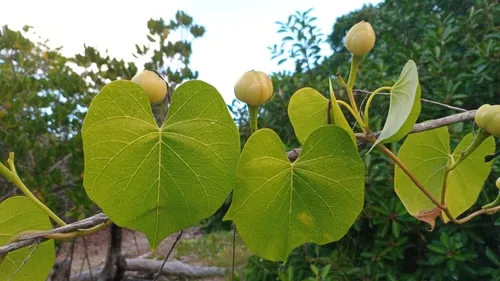
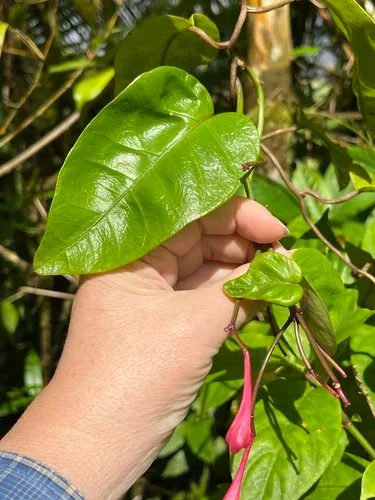
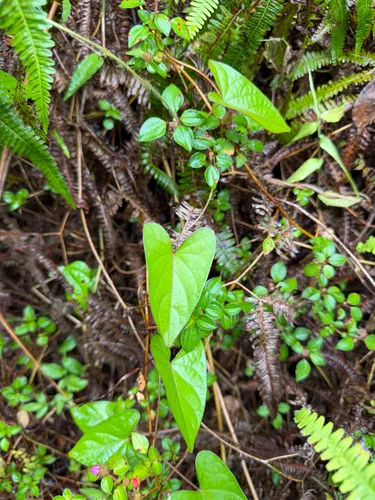
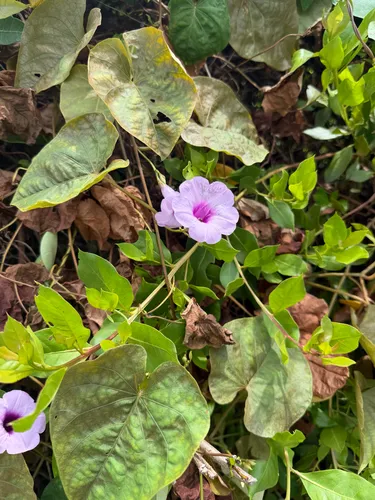
Ipomoea heptaphylla, sometimes known as Wright's morning glory in the United States, is a species of morning glory. It is incorrectly classified as I. wrightii in American publications, but is incorrectly known as I. tenuipes in Africa and India. It is an annual or short-lived perennial vine which climbs using twining stems, and has pink or purple flowers. The leaf shape is somewhat variable, with individuals possessing compound leaves palmately divided into five leaflets, and lanceolate-leaved individuals occurring in neighbouring populations. The name heptaphylla actually means 'seven-leaved'. This plant has a very extensive distribution, from Texas and adjacent states in the southeastern USA to Misiones in northern Argentina, the Greater Antilles of the Caribbean, India, Sri Lanka and East and Southern Africa. Despite its wide distribution it is uncommon throughout its range. The rediscovery of the presence of the species in India after an absence of over half a century was published in 2014. The species appears to favour dry subtropical to tropical habitats. Wikipedia →
Growing & care
USDA PLANTS · TRY- Hardiness
- ≥ zone 8 derived from its U.S. range
- Lifespan
- Annual
Wildlife & pollinators
How pollinator value is scored →❧ Caterpillar hosts ~39 caterpillar species
Ipomoea supports ~39 caterpillar species.
Native butterfly & moth caterpillars are the base of the terrestrial food web — most songbirds rear their young almost entirely on them. As a host for native Lepidoptera this is a strong genus.
Recorded feeding on Ipomoea in North America, including:


+ 8 more species → ↑ show fewer


✦ Bees specialist-bee host
Specialist native bees depend on it.
Some native bees are pollen specialists (oligolectic) — they raise young only on pollen from particular plant genera. Ipomoea is a recorded specialist-bee host, so losing it can mean losing the bee that relies on it.
Related plants
More Ipomoea →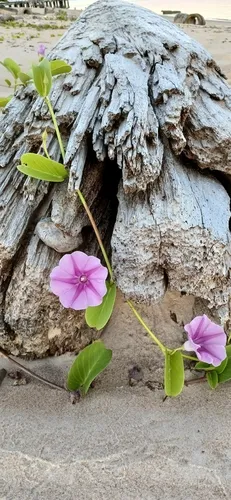
Sources for this entry (13) Open & cited
Cite this page Open data, please attribute
PlantKey’s data is open under CC BY-SA 4.0 — free to reuse and adapt, with attribution and the same licence. Photos keep their own per-image licence + credit (see Sources above).
Loading…
BibTeX
Loading…