Ames' Quillwort (var. amesii) Isoetes riparia var. amesii variety
Ames' Quillwort (var. amesii) is a perennial quillwort native to the lower 48 states.
More about this plant
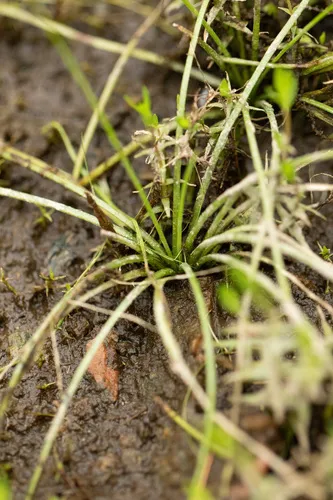
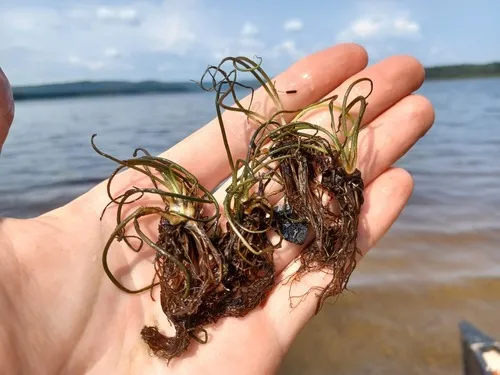
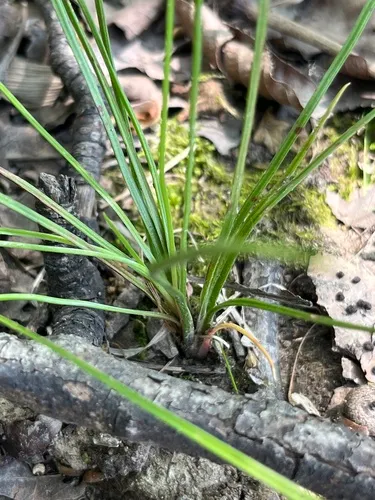
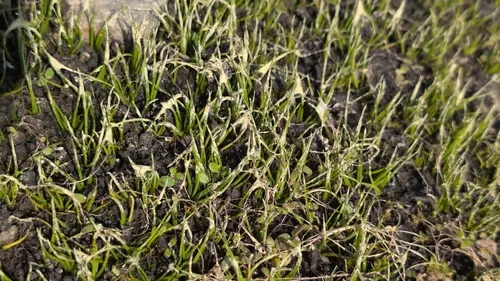
Isoetes riparia, the shore quillwort, is a species of plant in the family Isoetaceae. It can be found in rivers, creeks, and tidal mud flats in southern Quebec and southeastern Ontario, south to eastern New York. It has 5 to 35 long, erect bright green to yellow-green leaves, which are 6 to 35 centimeters long. The velum covers one fourth of the sporangium, which can be 7 millimeters long and 4 millimeters wide. The elongated ligule can grow to be 3 millimeters long. The spherical megaspores are 430 to 680 micrometers in diameter with closely set ridges. The kidney-shaped microspores are 24-35 micrometers long, and usually have spine-tipped tubercules. The megaspores can sometimes come to resemble that of either I. echinospora, if the megaspores become eroded and bear projections that could resemble spines, or I. macrospora, if the broken ridges take a certain shape. Wikipedia →
Growing & care
USDA PLANTS · TRY- Hardiness
- ≥ zone 7 derived from its U.S. range
- Lifespan
- Perennial
Wildlife & pollinators
How pollinator value is scored →❧ Caterpillar hosts ~1 caterpillar species
Isoetes supports ~1 caterpillar species.
Native butterfly & moth caterpillars are the base of the terrestrial food web — most songbirds rear their young almost entirely on them. As a host for native Lepidoptera this is a modest genus.
Recorded feeding on Isoetes in North America, including:

Related plants
More Isoetes →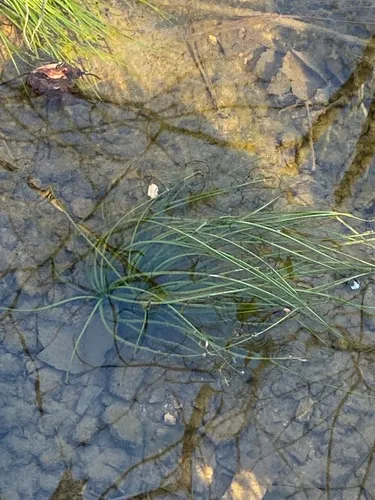
Sources for this entry (10) Open & cited
Cite this page Open data, please attribute
PlantKey’s data is open under CC BY-SA 4.0 — free to reuse and adapt, with attribution and the same licence. Photos keep their own per-image licence + credit (see Sources above).
Loading…
BibTeX
Loading…