
Drummond's Rush (var. drummondii) Juncus drummondii var. drummondii variety
Drummond's Rush (var. drummondii) is a perennial grass native to Canada and the lower 48 states.
More about this plant
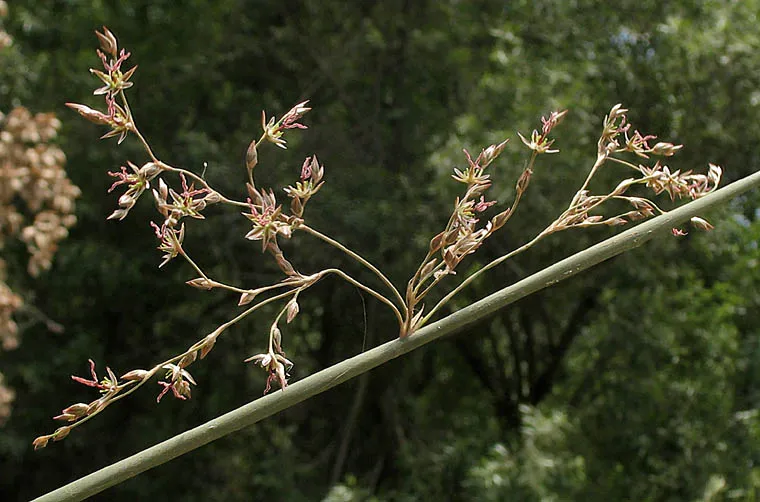
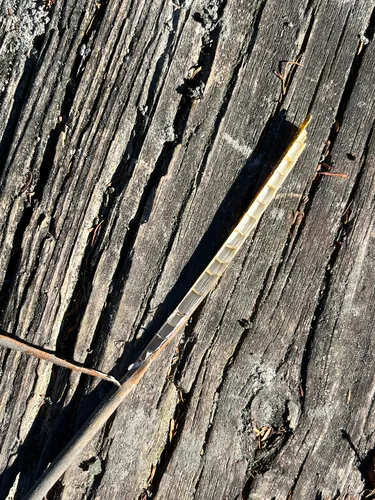
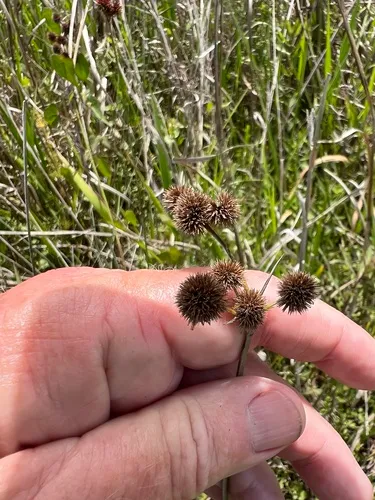
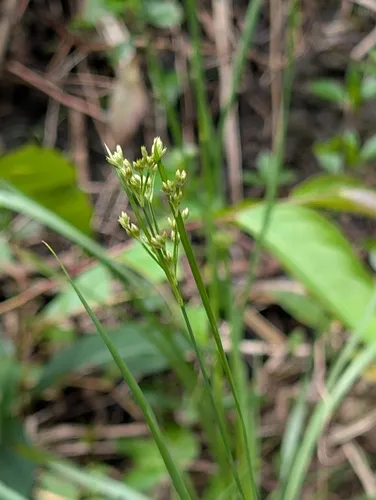
Juncus drummondii is a species of rush in the family Juncaceae. It is sometimes referred to by the common name Drummond's rush. It is native to western North America from northern Canada and Alaska to New Mexico, where it grows in wet coniferous forest and alpine meadows and slopes. This is a perennial herb forming narrow, erect tufts to about 40 centimeters in maximum height. The leaves are basal and most have no real blades; instead they form a sheath around the stem a few centimeters long. The inflorescence is borne on the side of the stem toward the top. There is a long, cylindrical bract at the base which extends out past the flowers. Each flower is on a thin pedicel. The thick tepals are dark brown, sometimes with green striping and thin, transparent edges. There are six stamens with yellowish anthers, and red stigmas. The fruit is a capsule. Wikipedia →
Growing & care
USDA PLANTS · TRY- Hardiness
- ≥ zone 6 derived from its U.S. range
- Lifespan
- Perennial
Wildlife & pollinators
How pollinator value is scored →❧ Caterpillar hosts ~6 caterpillar species
Juncus supports ~6 caterpillar species.
Native butterfly & moth caterpillars are the base of the terrestrial food web — most songbirds rear their young almost entirely on them. As a host for native Lepidoptera this is a modest genus.
Recorded feeding on Juncus in North America, including:


+ 8 more species → ↑ show fewer


Related plants
More Juncus →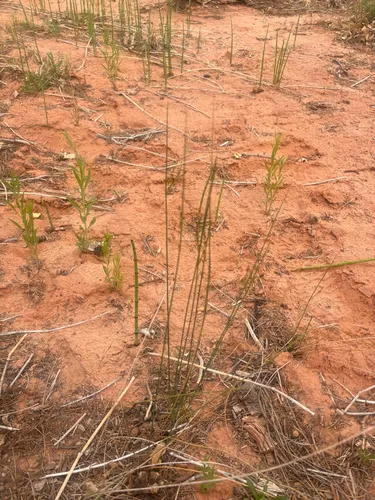
Sources for this entry (12) Open & cited
Cite this page Open data, please attribute
PlantKey’s data is open under CC BY-SA 4.0 — free to reuse and adapt, with attribution and the same licence. Photos keep their own per-image licence + credit (see Sources above).
Loading…
BibTeX
Loading…