PlantKey Open ecological atlas
Planner
Home / Browse / Lupinus / Narrowleaf Lupine
iNaturalist — CC, credited & licensed per image
Fabaceae family

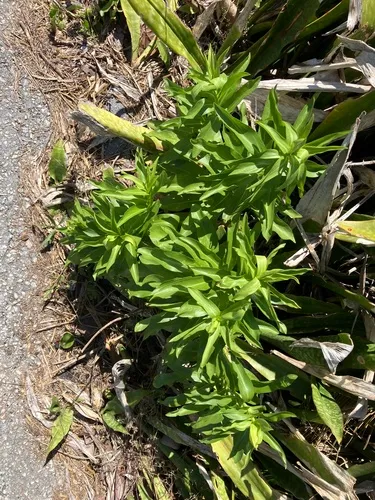
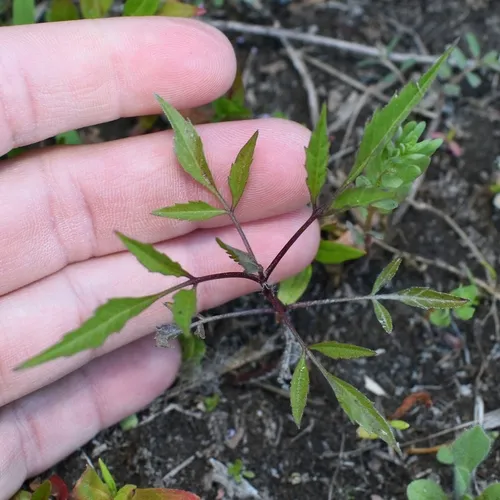
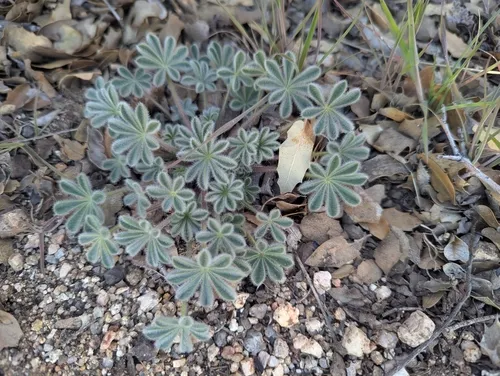
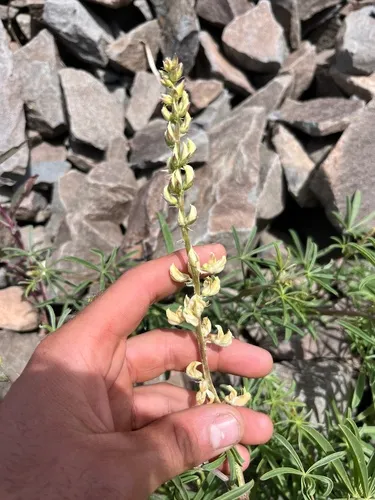
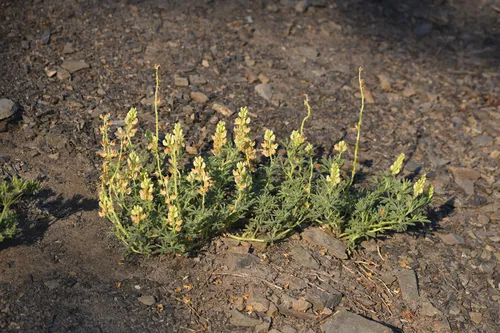
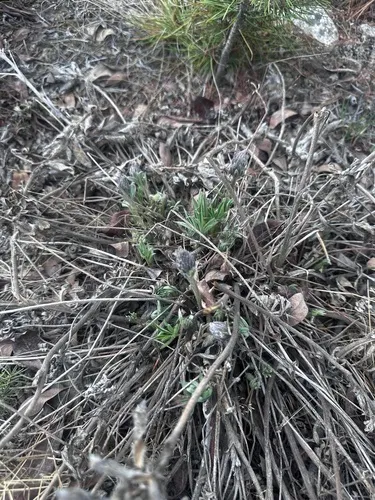
Narrowleaf Lupine Lupinus angustifolius

Deer-resistant — Low palatability to browsing deer, and rated toxic — which deer tend to avoid. Usually passed over, but no plant is truly deer-proof when food is scarce.
USDA livestock toxicity rating — not a pet assessment. See the Toxicity detail further down for what's documented.

Narrowleaf Lupine is an introduced annual herb, found in the lower 48 states. It grows to 4 ft and blooms Aug in part shade – shade, with green fruit.

⚠ Invasive here — plant a native instead USDA + GBIF

Narrowleaf Lupine is flagged invasive in the U.S. These natives fill a similar niche — same growth habit, bloom season, height, and region — so you keep the look and feed local wildlife instead of spreading a problem.
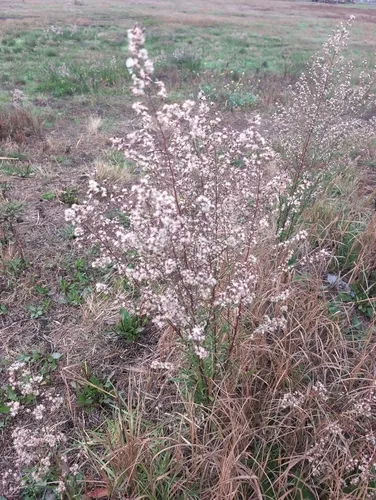
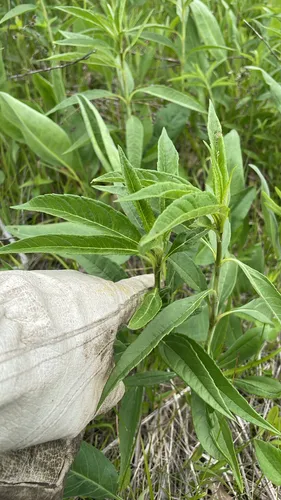
Matched on growth habit · bloom months · mature height · shared U.S. range (USDA + GBIF) — a starting point, not a prescription.

Growing & care

USDA PLANTS · TRY
Conditions
Sources · Conditions
USDA PLANTS — Sun · Soil & moisture
USDA — SoilPH — Soil pH
USDA PLANTS (DwCA, Zenodo 17903503) — Fertility Requirement / Soil Adaptation — Fertility need · Adapts to
USDA — Temp-Min °F — Hardiness
Sun
Part shade – shade
Soil & moisture
Medium moisture
Soil pH
5.6–7.5
Fertility need
Medium
Adapts to
Coarse (sandy), Medium (loam)
Hardiness
USDA zone 10+
Size & form
Sources · Size & form
USDA PLANTS (DwCA, Zenodo 17903503) — Height, Mature — Height
USDA PLANTS (DwCA, Zenodo 17903503) — Growth Rate / Spread / Growth Form / Lifespan / Active Growth Period / Seed Period — Spread · Growth rate · Growth form · Active growth
USDA PLANTS — Lifespan
TRY Plant Trait Database (CC BY 4.0) · USDA PLANTS — Foliage
USDA PLANTS (DwCA, Zenodo 17903503) — Fruit/Seed Color / Fruit Persistence — Fruit
Height
4 ft
Spread
None — clumping
Growth rate
Rapid
Growth form
Single crown
Lifespan
Annual
Foliage
Broadleaf · medium texture
Active growth
Autumn through spring
Fruit
Green persists into winter
In the garden
Sources · In the garden
USDA PLANTS (DwCA, Zenodo 17903503) — Propagation Method / Commercial Availability — Propagate by · In the trade
USDA PLANTS (DwCA, Zenodo 17903503) — Germination (cold stratification) — Seed starting
USDA PLANTS — Seed Period — Seeds ripen
USDA PLANTS (DwCA, Zenodo 17903503) — Foliage Texture / Browse Palatability / Resprout — Deer browsing · Resprouts if cut
Propagate by
Seed
Seed starting
No stratification needed
Seeds ripen
Summer – Autumn seed-collection / harvest window
In the trade
No known commercial source
Deer browsing
Low often deer-resistant
Resprouts if cut
No
Shrub layer — Sits in the shrub of a layered food forest or polyculture.Open guide →
Nitrogen fixer — Fixes atmospheric nitrogen through root-nodule bacteria — builds soil fertility for itself and its neighbours, cutting fertiliser need.Open guide →
derived roles
The garden year bloom → fruit → fall colour
J
F
M
A
M
J
J
A
S
O
N
D
Bloom
Bloom (the flower's colour)
Bloom · Aug — USDA PLANTS (DwCA, Zenodo 17903503) — BloomPeriod
When to sow · for your area

Sow timing keys off your local last- and first-frost dates.

Species characteristics from USDA PLANTS (public domain) + TRY (CC BY) — general guidance, not a guarantee for your exact site. Deer "browsing" is documented palatability, not a deer-proof claim.

Wildlife & pollinators

How pollinator value is scored →
❧ Caterpillar hosts ~33 caterpillar species

Lupinus supports ~33 caterpillar species.

Native butterfly & moth caterpillars are the base of the terrestrial food web — most songbirds rear their young almost entirely on them. As a host for native Lepidoptera this is a strong genus.

Keystone count (genus-level) from Warren II 2026 (CC0) · Tallamy host-use records. Named species (a documented Nearctic sample, not exhaustive) from NHM HOSTS (CC0).
✦ Bees specialist-bee host · 29 bee visitors

Specialist native bees depend on it.

Some native bees are pollen specialists (oligolectic) — they raise young only on pollen from particular plant genera. Lupinus is a recorded specialist-bee host, so losing it can mean losing the bee that relies on it.

Specialist hosts from Smith et al. 2024. Visitor records (observations, not exhaustive) from Noori et al. 2026 (CC BY 4.0) · GloBI → · = pollen-specialist bee (Smith et al. 2024)
Species thumbnails re-hosted from iNaturalist — Creative Commons, credited per image (hover for credit). Click any species to see it on iNaturalist. Not exhaustive; many taxa have no openly-licensed photo yet.
How we know this (2) Methods & honest limits
Leaf build Direct fact

We read each species’ measured specific leaf area (leaf area per unit dry weight) from the Global Spectrum dataset and band it: thin & fast (high SLA), medium, or thick & tough (low SLA). The global median is about 10 mm²/mg.

Honest limits: A species-mean from pooled measurements — individual plants vary with light and site. A broad strategy signal, not a precise per-plant figure.

Díaz, S. et al. (2022) The global spectrum of plant form and function: enhanced species-level trait dataset. Scientific Data 9:755.
Photosynthesis Direct fact

A recorded categorical fact: each species is tagged C3 (standard), C4 (heat/water-efficient) or CAM (succulent, night-time CO₂ uptake) — or a facultative combination. We only show a trait card for the noteworthy C4/CAM cases; C3 is the unremarkable majority, kept in the data but not surfaced as a card.

Kattge, J. et al. TRY plant trait database — Categorical Traits Dataset (2012).
Derived values are computed from open data by a published method — labelled, cited, and never shown as a direct observation. Full methodology →
Sources for this entry (31) Open & cited
[01] Scientific name & family — USDA PLANTS (DwCA, Zenodo 17903503)
[02] Growth habit & duration — USDA PLANTS (DwCA, Zenodo 17903503)
[03] Native status & distribution — USDA PLANTS (DwCA, Zenodo 17903503)
[04] Common name — USDA PLANTS (via GBIF)
[17] Invasive / introduced status — US-RIIS v2.0 (USGS)
[19] Ecological value — Warren II 2026 (CC0) · Tallamy host-use counts · Smith et al. 2024 (CC BY)
[20] Conservation rank — NatureServe Explorer (CC BY)
[22] Functional traits — TRY Plant Trait Database (CC BY 4.0)
[23] Photosynthetic pathway — TRY Plant Trait Database (CC BY 4.0)
[24] Nitrogen fixation — Werner et al. 2014 (Dryad, CC0)
[28] Bee specialists — Smith et al. 2024 (Zenodo, CC BY 4.0)
[29] Flower-visitor value (derived) — Noori et al. 2026 (CC BY 4.0) · GloBI
[30] Caterpillar host count — Warren II 2026 (Dryad, CC0) · Tallamy host-use counts
[31] Caterpillar species — NHM HOSTS (CC0)
Spot an error or have a better photo? Every field links to its source, and the whole dataset is open.
Cite this page Open data, please attribute

PlantKey’s data is open under CC BY-SA 4.0 — free to reuse and adapt, with attribution and the same licence. Photos keep their own per-image licence + credit (see Sources above).

Citation

Loading…

BibTeX
Loading…