
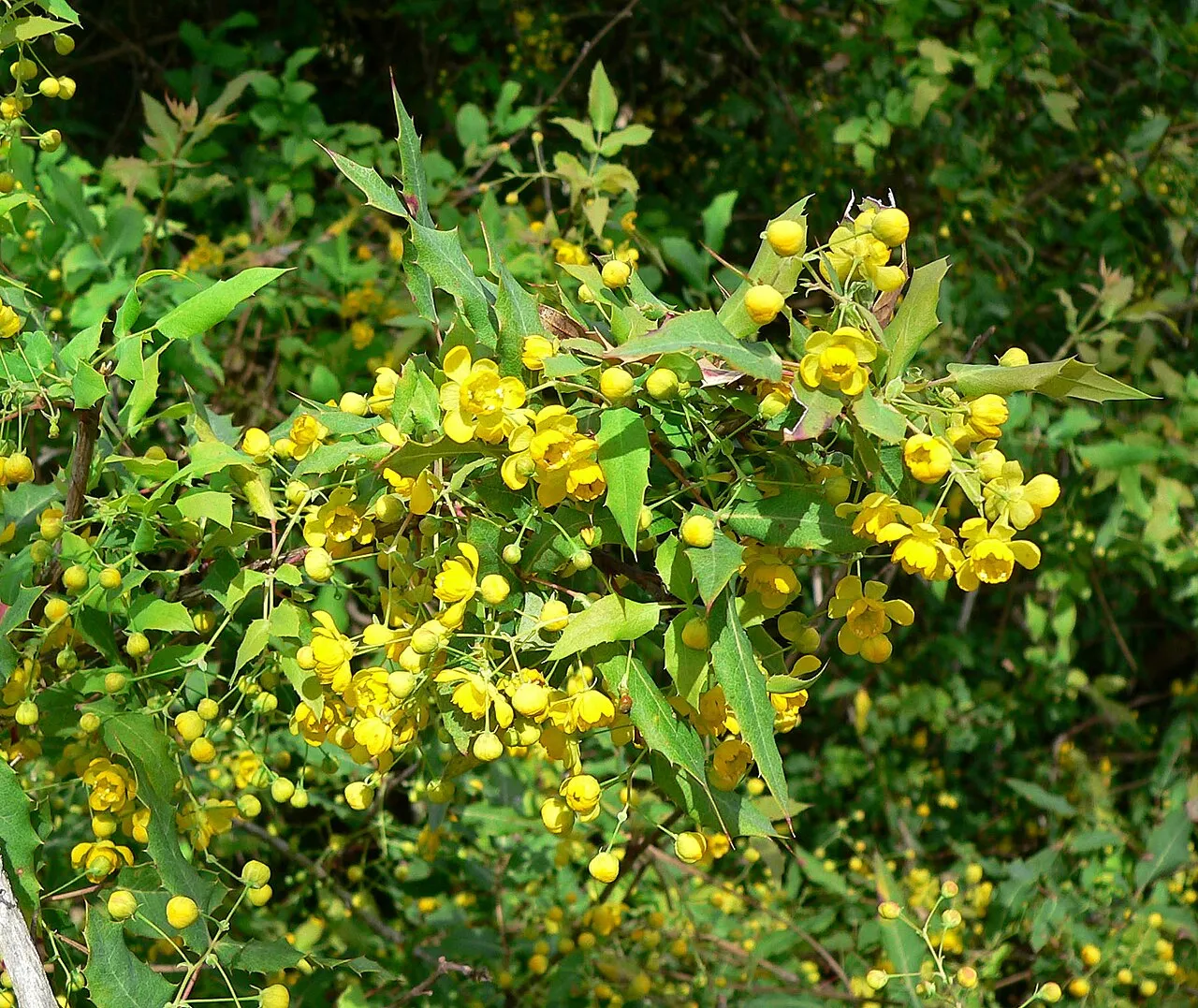
© Stan Shebs · CC BY-SA 3.0
Wikimedia Commons — CC, credited & licensed per image
Berberidaceae family
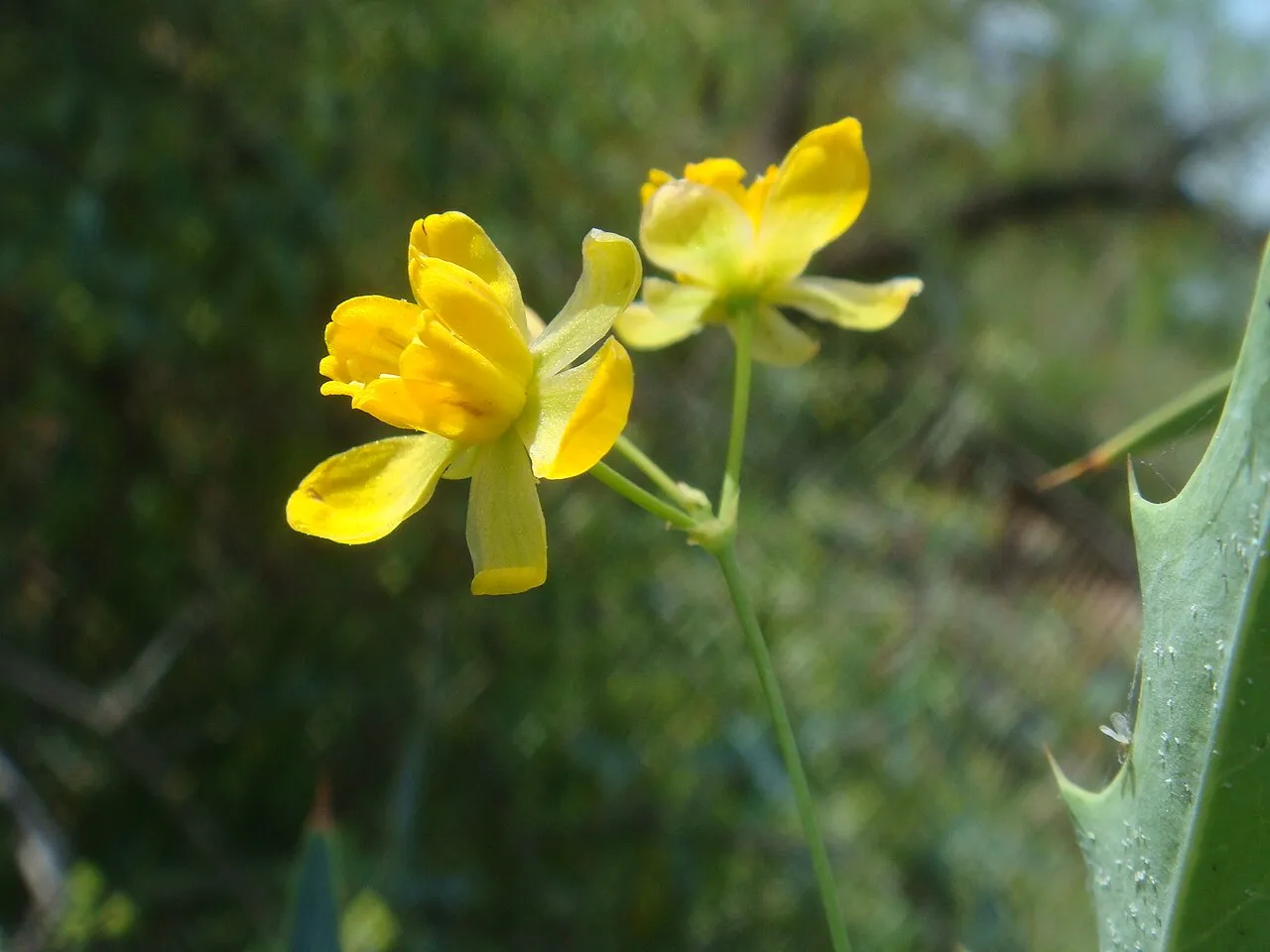
Fremont's Mahonia Mahonia fremontii
Native
Fremont's Mahonia is a perennial shrub native to the lower 48 states. It grows to 2.6 ft and blooms Apr – Jul.
Growing & care
USDA PLANTS · TRY Conditions
Sources · Conditions
Cold hardiness (derived) — Hardiness
- Hardiness
- ≥ zone 7 derived from its U.S. range
Size & form
Sources · Size & form
TRY Plant Trait Database (CC BY 4.0) — Height · Foliage
USDA PLANTS — Lifespan
- Height
- 2.6 ft
- Lifespan
- Perennial
- Foliage
- Broadleaf
In the garden
Herb layer — Sits in the herb of a layered food forest or polyculture.Open guide →
derived roles The garden year bloom → fruit → fall colour
J
F
M
A
M
J
J
A
S
O
N
D
Bloom
Bloom (the flower's colour)
Bloom · Apr – Jul — 31 obs · Herbarium specimens — Park et al. 2023 (CC BY 4.0)
Species characteristics from USDA PLANTS (public domain) + TRY (CC BY) — general guidance, not a
guarantee for your exact site. Deer "browsing" is documented palatability, not a deer-proof claim.
Wildlife & pollinators
How pollinator value is scored →❧ Caterpillar hosts Documented caterpillar host
Recorded feeding on Mahonia in North America, including:


+ 2 more species → ↑ show fewer

Named species (a documented Nearctic sample, not exhaustive) from NHM HOSTS (CC0). ✦ = recorded on this exact species.
Species thumbnails re-hosted from iNaturalist — Creative Commons, credited per image (hover for credit). Click any species to see it on iNaturalist. Not exhaustive; many taxa have no openly-licensed photo yet.
Frequently grows with
Across 93 U.S. vegetation-survey plots that recorded Fremont's Mahonia, these catalog species turned up most often in the same plot — a real field co-occurrence signal, not a planting prescription.
Utah Juniper · 48% Broom Snakeweed · 42% Twoneedle Pinyon · 37% Banana Yucca · 23% Purple Threeawn · 22% Sideoats Grama · 20% Oneseed Juniper · 20% Rose Heath · 19%
By region — what it grows with near you
Temperate (eastern & central U.S.) · 62 plots
Arid Southwest · 25 plots
"%" = share of this plant's plots that also held the species. From
sPlotOpen → (Sabatini et al. 2021, CC BY 4.0) — open vegetation plots: wild community composition, not garden design.
Related plants
More Mahonia →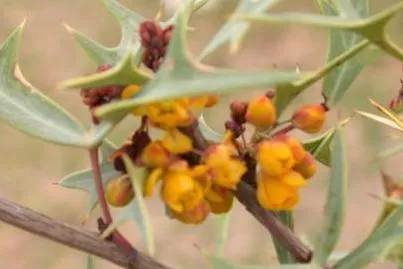
Native
Algerita
Mahonia trifoliolata
●●○○○ 
Native
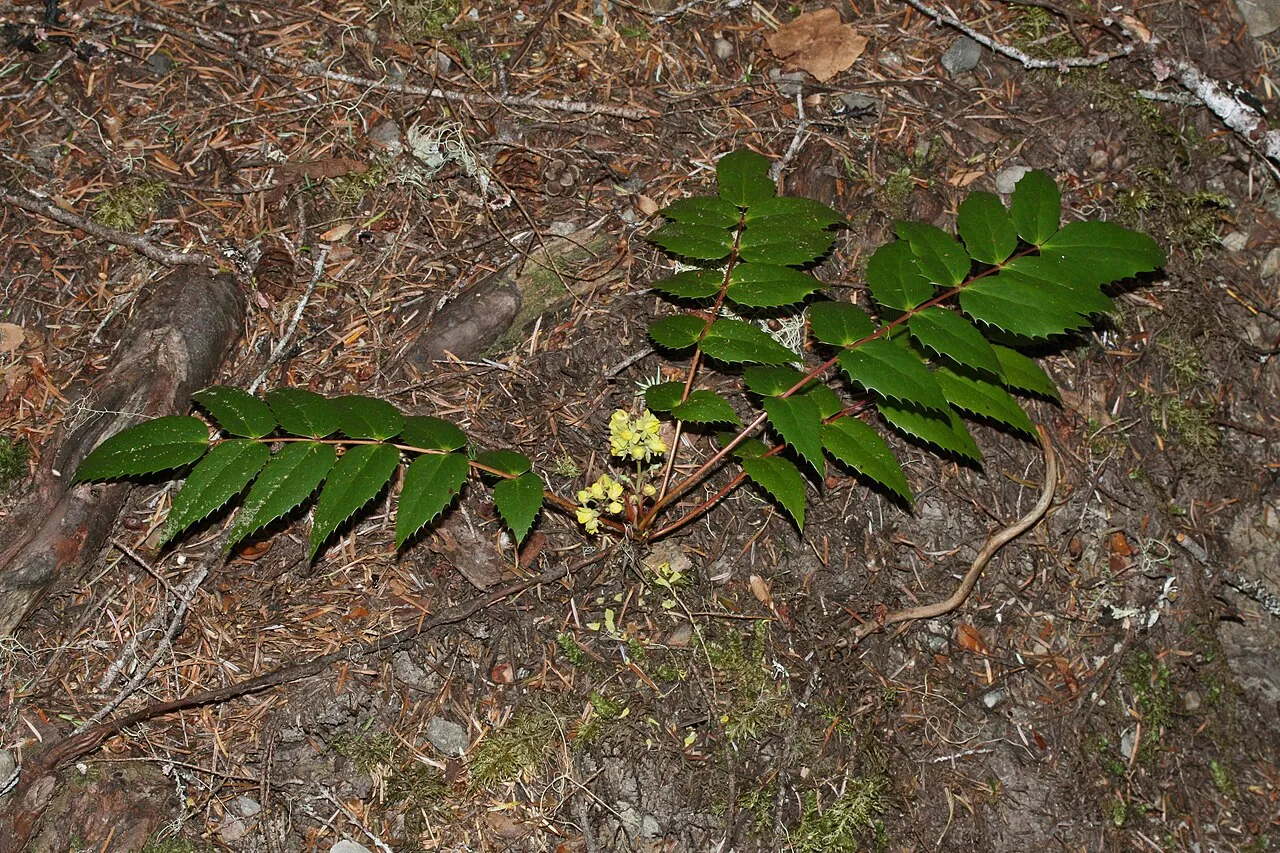
Cascade Barberry
Mahonia nervosa
●●○○○ 
Native
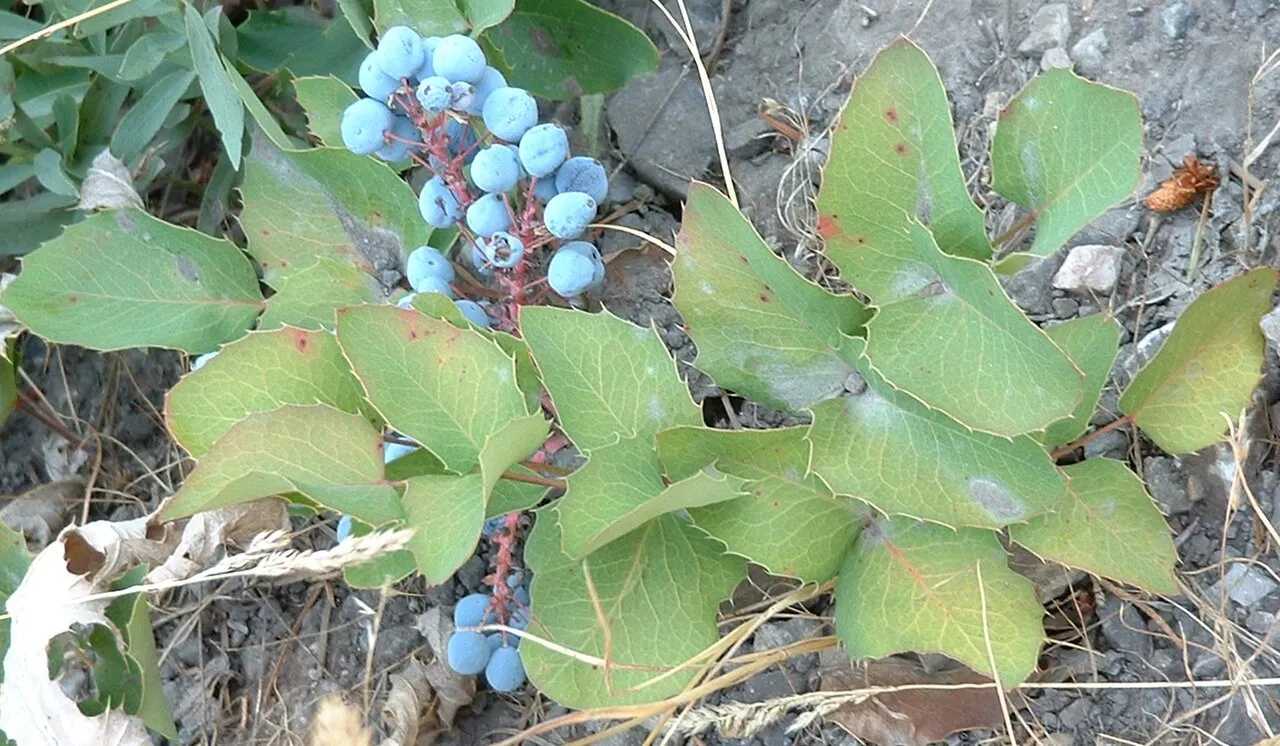
Creeping Barberry
Mahonia repens
●●○○○ 
Native
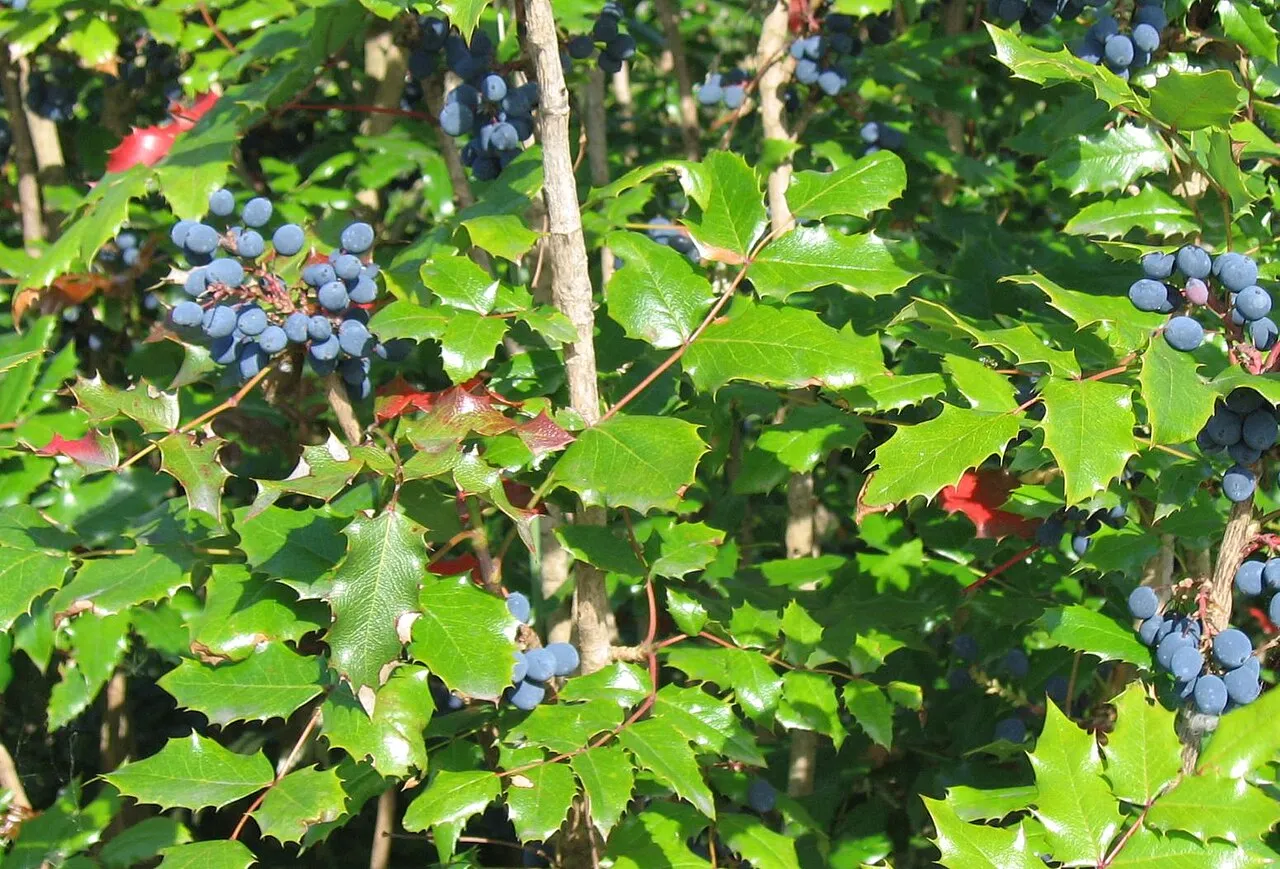
Hollyleaved Barberry
Mahonia aquifolium
●●○○○ 
Native
Nevin's Barberry
Mahonia nevinii
●●○○○ 
Native
Red Barberry
Mahonia haematocarpa
●●○○○ Same genus / family, ranked by ecological value — from the PlantKey catalog
Sources for this entry (14) Open & cited
[01] Scientific name & family — USDA PLANTS (DwCA, Zenodo 17903503)
[02] Growth habit & duration — USDA PLANTS (DwCA, Zenodo 17903503)
[03] Native status & distribution — USDA PLANTS (DwCA, Zenodo 17903503)
[04] Common name — USDA PLANTS (via GBIF)
[05] Invasive / introduced status — USDA PLANTS (DwCA, Zenodo 17903503) — native status
[06] Photos — Wikimedia Commons — CC, credited per image
[07] Ecological value — GloBI
[08] Bloom period — Herbarium specimens — Park et al. 2023 (CC BY 4.0)
[09] Foliage — TRY Plant Trait Database (CC BY 4.0)
[10] Height — TRY Plant Trait Database (CC BY 4.0)
[11] Functional traits — TRY Plant Trait Database (CC BY 4.0)
[12] Cold hardiness (derived) — Derived from U.S. range × USDA PHZM zones
[13] Caterpillar species — NHM HOSTS (CC0)
[14] Grows with — sPlotOpen — Sabatini et al. 2021 (iDiv, CC BY 4.0)
Spot an error or have a better photo? Every field links to its source, and the whole dataset is open.
Cite this page Open data, please attribute
PlantKey’s data is open under CC BY-SA 4.0 — free to reuse and adapt, with attribution and the same licence. Photos keep their own per-image licence + credit (see Sources above).
Citation
Loading…
BibTeX
Loading…