
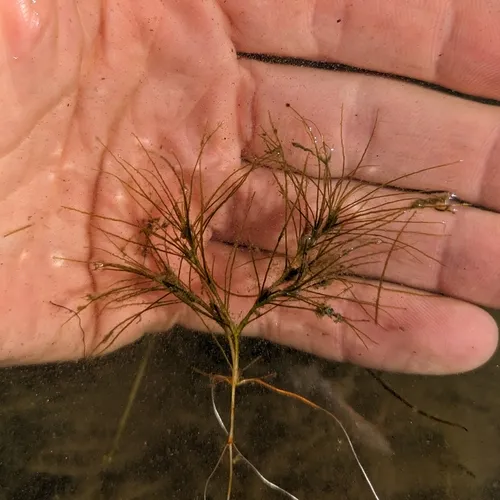
Brittle Waternymph Najas minor
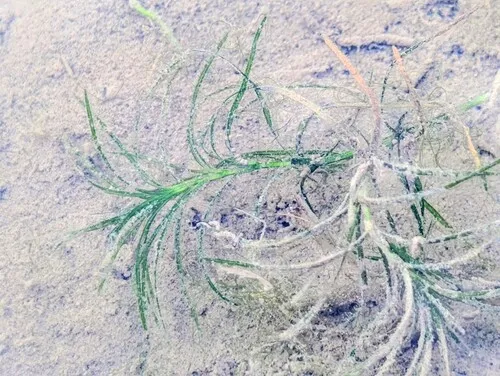
Brittle Waternymph is an introduced annual herb, found in Canada and the lower 48 states. It grows to 2 ft and blooms Aug in full sun – part shade, with green fruit.
Brittle Waternymph is flagged invasive in the U.S. These natives fill a similar niche — same growth habit, bloom season, height, and region — so you keep the look and feed local wildlife instead of spreading a problem.
Growing & care
USDA PLANTS · TRY- Sun
- Full sun – part shade
- Soil & moisture
- High moisture
- Soil pH
- 6.3–7.2
- Fertility need
- Medium
- Adapts to
- Medium (loam), Fine (clay)
- Hardiness
- USDA zone 12+
- Height
- 2 ft
- Spacing
- 6–8 ft apart from USDA planting density
- Spread
- Slow
- Growth rate
- Rapid
- Lifespan
- Annual
- Foliage
- Broadleaf · fine texture
- Active growth
- Spring & summer
- Fruit
- Green
- Propagate by
- Sprigs
- Seed starting
- No stratification needed
- Seeds ripen
- Summer – Autumn seed-collection / harvest window
- In the trade
- No known commercial source
- Resprouts if cut
- No
Sow timing keys off your local last- and first-frost dates.
Related plants
More Najas →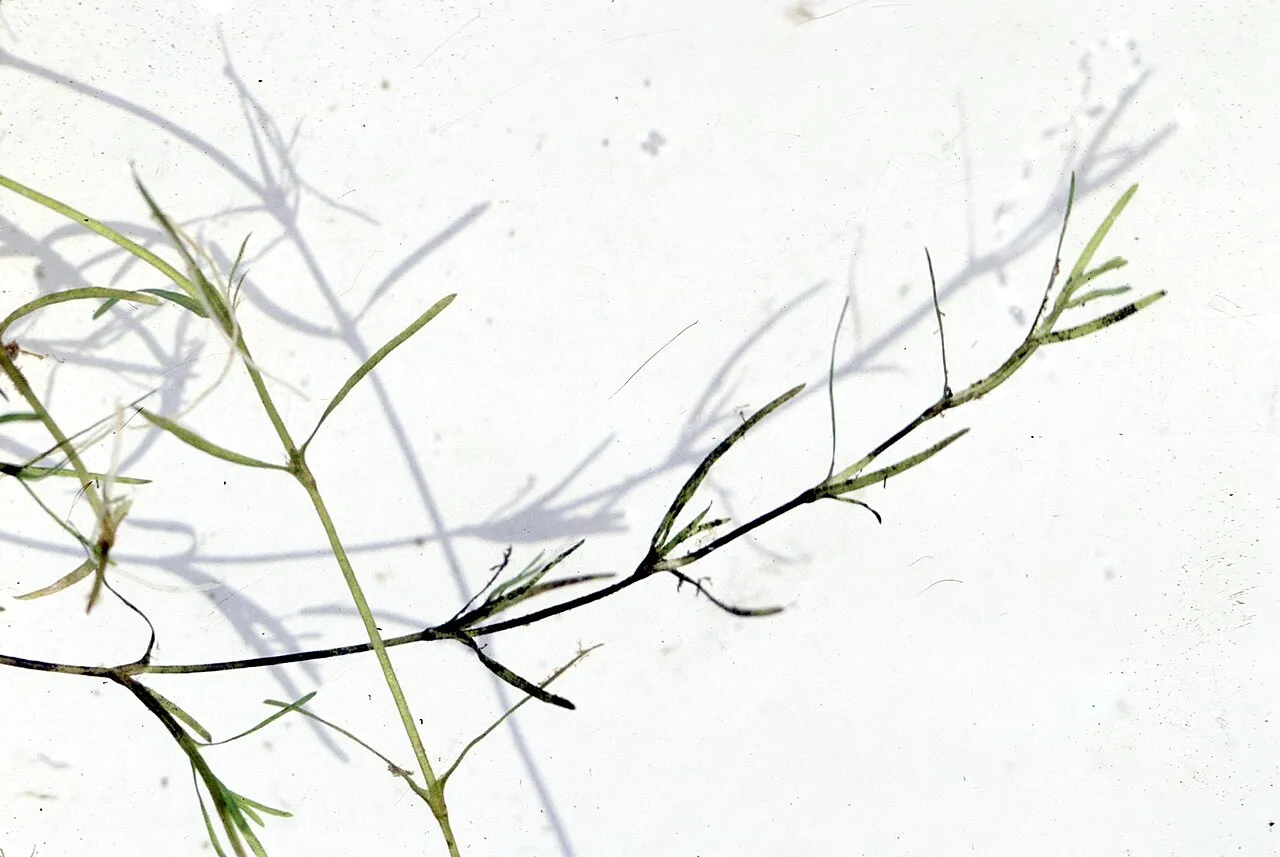
How we know this (4) Methods & honest limits
We read each species’ measured specific leaf area (leaf area per unit dry weight) from the Global Spectrum dataset and band it: thin & fast (high SLA), medium, or thick & tough (low SLA). The global median is about 10 mm²/mg.
Honest limits: A species-mean from pooled measurements — individual plants vary with light and site. A broad strategy signal, not a precise per-plant figure.
We place each species on Grime’s competitor–stress-tolerator–ruderal (C–S–R) triangle using the globally-calibrated “StrateFy” method: leaf size drives the competitor score, dense low-area leaves the stress-tolerator score, and thin high-area leaves the ruderal score. The result is a C/S/R percentage mix and one of 19 strategy classes; we show it in plain words and keep the percentages for the curious.
Honest limits: A species-mean strategy from pooled global leaf measurements — a broad ecological signal, not a precise per-plant or per-site value. Derived, never a measured fact.
A recorded categorical fact: each species is tagged C3 (standard), C4 (heat/water-efficient) or CAM (succulent, night-time CO₂ uptake) — or a facultative combination. We only show a trait card for the noteworthy C4/CAM cases; C3 is the unremarkable majority, kept in the data but not surfaced as a card.
We take the plant’s U.S. county range and look up each county’s long-term climate, then summarise: native rainfall = the median annual rainfall across its counties; heat tolerance = the warm end (90th percentile) of average temperature across its range (mirroring how our cold-hardiness floor uses an extreme). Counties + medians blunt the roadside/observer bias that makes point-level climate unreliable. Needs at least five placeable counties.
Honest limits: A realized, sampling-biased niche (where it has been recorded, not its physiological optimum), and county climate is coarse — large Western counties span deserts and mountains. Derived guide, never a measured fact.
Sources for this entry (30) Open & cited
Cite this page Open data, please attribute
PlantKey’s data is open under CC BY-SA 4.0 — free to reuse and adapt, with attribution and the same licence. Photos keep their own per-image licence + credit (see Sources above).
Loading…
BibTeX
Loading…