
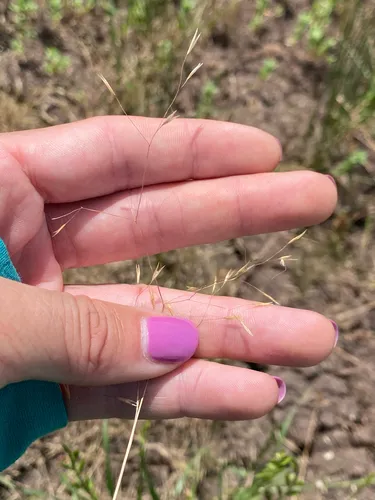
© David Willis · CC BY-NC
iNaturalist — CC, credited & licensed per image
Poaceae family
Savannah-panicgrass Phanopyrum gymnocarpon
Native
Late-season nectar — Flowers in a late-autumn window when few other plants in our catalog bloom — valuable late forage for pollinators (relative to our catalog's bloom coverage).
Savannah-panicgrass is a perennial grass native to the lower 48 states. It blooms Sep – Oct.
Growing & care
USDA PLANTS · TRY Conditions
Sources · Conditions
Cold hardiness (derived) — Hardiness
- Hardiness
- ≥ zone 8 derived from its U.S. range
Size & form
Sources · Size & form
USDA PLANTS — Lifespan
- Lifespan
- Perennial
In the garden
Herb layer — Sits in the herb of a layered food forest or polyculture.Open guide →
Rain garden / bioswale — Rated OBL on the wetland list — tolerates wet feet, so it suits the soggy zone of a rain garden or bioswale that catches and filters runoff.Open guide →
derived roles The garden year bloom → fruit → fall colour
J
F
M
A
M
J
J
A
S
O
N
D
Bloom
Bloom (the flower's colour)
Bloom · Sep – Oct — 15 obs · Herbarium specimens — Park et al. 2023 (CC BY 4.0)
Species characteristics from USDA PLANTS (public domain) + TRY (CC BY) — general guidance, not a
guarantee for your exact site. Deer "browsing" is documented palatability, not a deer-proof claim.
Wildlife & pollinators
How pollinator value is scored →❧ Caterpillar hosts ~1 caterpillar species
Phanopyrum supports ~1 caterpillar species.
Native butterfly & moth caterpillars are the base of the terrestrial food web — most songbirds rear their young almost entirely on them. As a host for native Lepidoptera this is a modest genus.
Keystone count (genus-level) from Warren II 2026 (CC0) · Tallamy host-use records.
Related plants
More Phanopyrum →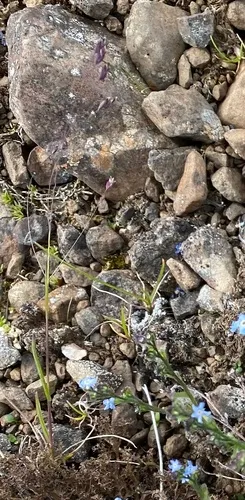
Native
Alaska Bluegrass
Poa paucispicula
●●●○○ 
Native
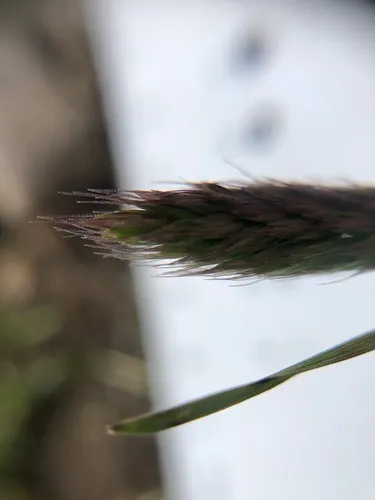
Alaskan Wheatgrass
Elymus alaskanus
●●●○○ 
Native
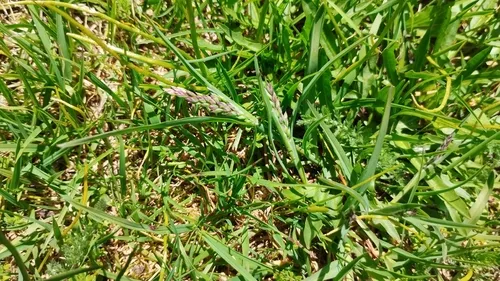
Alpine Bluegrass
Poa alpina
●●●○○ 
Native
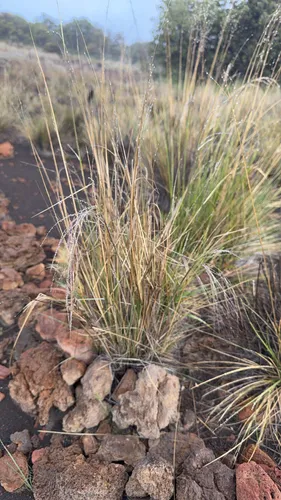
Alpine Hairgrass
Deschampsia nubigena
●●●○○ Native
Amphi-Beringian Bluegrass
Poa arctostepporum
●●●○○ 
Native
Annual Hairgrass
Deschampsia danthonioides
●●●○○ Same genus / family, ranked by ecological value — from the PlantKey catalog
Sources for this entry (12) Open & cited
[01] Scientific name & family — USDA PLANTS (DwCA, Zenodo 17903503)
[02] Growth habit & duration — USDA PLANTS (DwCA, Zenodo 17903503)
[03] Native status & distribution — USDA PLANTS (DwCA, Zenodo 17903503)
[04] Common name — USDA PLANTS (via GBIF)
[05] Invasive / introduced status — USDA PLANTS (DwCA, Zenodo 17903503) — native status
[06] Wetland indicator — USACE National Wetland Plant List (2022)
[07] Photos — iNaturalist — CC, credited per image
[08] Ecological value — Warren II 2026 (CC0) · Tallamy host-use counts
[09] Bloom period — Herbarium specimens — Park et al. 2023 (CC BY 4.0)
[10] Conservation rank — NatureServe Explorer (CC BY)
[11] Cold hardiness (derived) — Derived from U.S. range × USDA PHZM zones
[12] Caterpillar host count — Warren II 2026 (Dryad, CC0) · Tallamy host-use counts
Spot an error or have a better photo? Every field links to its source, and the whole dataset is open.
Cite this page Open data, please attribute
PlantKey’s data is open under CC BY-SA 4.0 — free to reuse and adapt, with attribution and the same licence. Photos keep their own per-image licence + credit (see Sources above).
Citation
Loading…
BibTeX
Loading…