
© Geangles Fernandes Silva · CC BY-NC
iNaturalist — CC, credited & licensed per image
Asteraceae family
Southeastern Annual Saltmarsh Aster Symphyotrichum squamatum
Native Specialist-bee host
Southeastern Annual Saltmarsh Aster is an annual wildflower native to the lower 48 states. It grows to 4 ft. A host for pollen-specialist native bees.
Growing & care
USDA PLANTS · TRY Conditions
Sources · Conditions
Cold hardiness (derived) — Hardiness
- Hardiness
- ≥ zone 9 derived from its U.S. range
Size & form
Sources · Size & form
TRY Plant Trait Database (CC BY 4.0) — Height
USDA PLANTS — Lifespan
- Height
- 4 ft
- Lifespan
- Annual
In the garden
Shrub layer — Sits in the shrub of a layered food forest or polyculture.Open guide →
Rain garden / bioswale — Rated OBL on the wetland list — tolerates wet feet, so it suits the soggy zone of a rain garden or bioswale that catches and filters runoff.Open guide →
derived roles
Species characteristics from USDA PLANTS (public domain) + TRY (CC BY) — general guidance, not a
guarantee for your exact site. Deer "browsing" is documented palatability, not a deer-proof claim.
Wildlife & pollinators
How pollinator value is scored →✦ Bees specialist-bee host · 92 bee visitors
Specialist native bees depend on it.
Some native bees are pollen specialists (oligolectic) — they raise young only on pollen from particular plant genera. Symphyotrichum is a recorded specialist-bee host, so losing it can mean losing the bee that relies on it.
92 native & managed bee species are documented visiting Southeastern Annual Saltmarsh Aster — the 12 most-recorded:


Specialist hosts from Smith et al. 2024. Visitor records (observations, not exhaustive) from Noori et al. 2026 (CC BY 4.0) ·
GloBI →
Species thumbnails re-hosted from iNaturalist — Creative Commons, credited per image (hover for credit). Click any species to see it on iNaturalist. Not exhaustive; many taxa have no openly-licensed photo yet.
Related plants
More Symphyotrichum →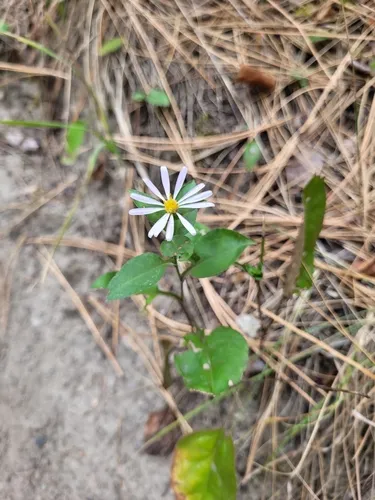
Native
Alpine Leafybract Aster
Symphyotrichum foliaceum
●●●●● 
Native
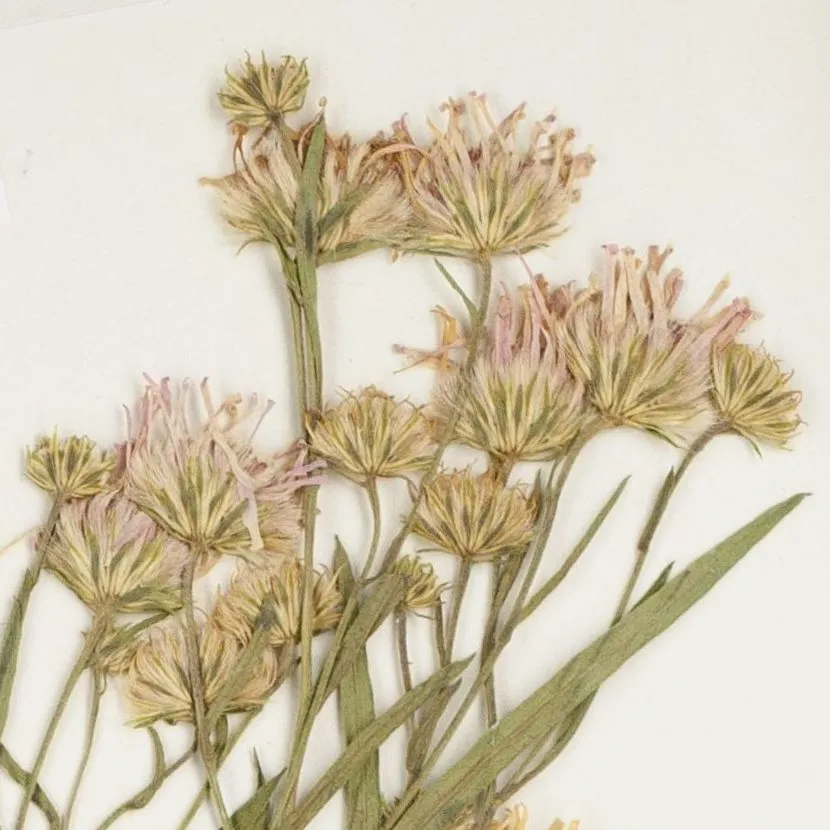
Anticosti Island Aster
Symphyotrichum anticostense
●●●●● 
Native
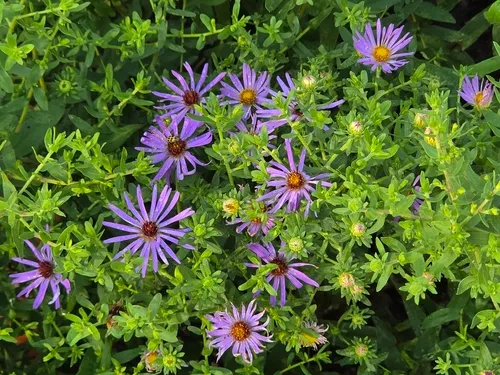
Aromatic Aster
Symphyotrichum oblongifolium
●●●●● 
Native
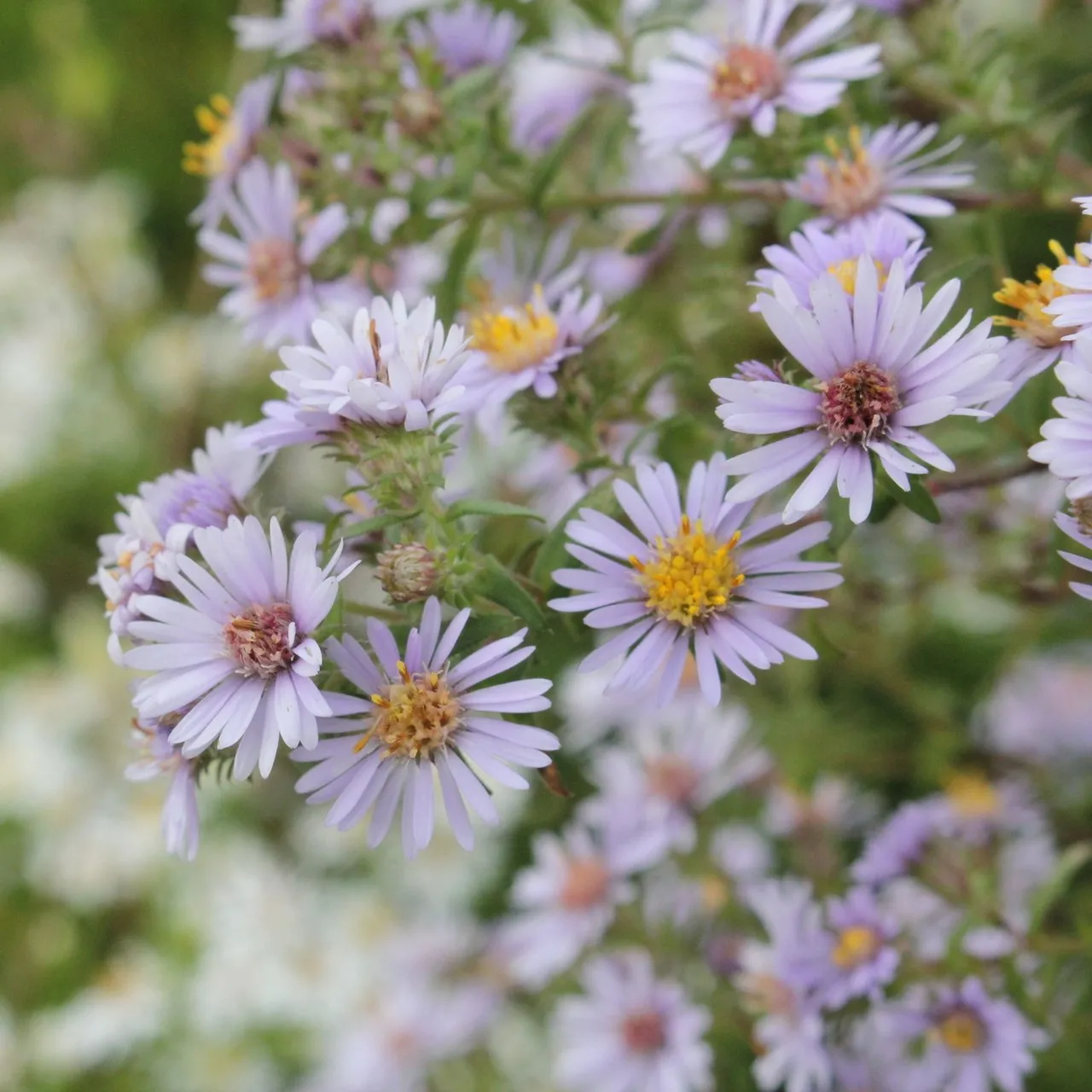
Aster
Symphyotrichum ×amethystinum
●●●●● Native
Aster
Symphyotrichum ×batesii
●●●●● Native
Aster
Symphyotrichum ×columbianum
●●●●● Same genus / family, ranked by ecological value — from the PlantKey catalog
Sources for this entry (13) Open & cited
[01] Scientific name & family — USDA PLANTS (DwCA, Zenodo 17903503)
[02] Growth habit & duration — USDA PLANTS (DwCA, Zenodo 17903503)
[03] Native status & distribution — USDA PLANTS (DwCA, Zenodo 17903503)
[04] Common name — USDA PLANTS (via GBIF)
[05] Invasive / introduced status — USDA PLANTS (DwCA, Zenodo 17903503) — native status
[06] Wetland indicator — USACE National Wetland Plant List (2022)
[07] Photos — iNaturalist — CC, credited per image
[09] Height — TRY Plant Trait Database (CC BY 4.0)
[10] Cold hardiness (derived) — Derived from U.S. range × USDA PHZM zones
[13] County range — GBIF Open Data — open-licensed occurrences (CC0/CC-BY) → county
Spot an error or have a better photo? Every field links to its source, and the whole dataset is open.
Cite this page Open data, please attribute
PlantKey’s data is open under CC BY-SA 4.0 — free to reuse and adapt, with attribution and the same licence. Photos keep their own per-image licence + credit (see Sources above).
Citation
Loading…
BibTeX
Loading…