
© Lecia Schall · CC BY-NC
iNaturalist — CC, credited & licensed per image
Pictured: Symphyotrichum subspicatum — the species. This variety isn’t separately illustrated.
Asteraceae family
Douglas Aster (var. subspicatum) Symphyotrichum subspicatum var. subspicatum variety
Native Specialist-bee host
Deer-resistant — Low palatability to browsing deer. Usually passed over, but no plant is truly deer-proof when food is scarce.
Douglas Aster (var. subspicatum) is a perennial wildflower native to Alaska, Canada, and the lower 48 states. It grows to 0.3 ft and blooms Aug in full sun – part shade, with brown fruit. A host for pollen-specialist native bees.
Growing & care
USDA PLANTS · TRY Conditions
Sources · Conditions
USDA PLANTS — Sun · Soil & moisture
USDA — SoilPH — Soil pH
USDA PLANTS (DwCA, Zenodo 17903503) — Fertility Requirement / Soil Adaptation — Fertility need · Adapts to
USDA — Temp-Min °F — Hardiness
- Sun
- Full sun – part shade
- Soil & moisture
- High moisture
- Soil pH
- 6–7.5
- Fertility need
- Low
- Adapts to
- Coarse (sandy), Medium (loam), Fine (clay)
- Hardiness
- USDA zone 7+
Size & form
Sources · Size & form
USDA PLANTS (DwCA, Zenodo 17903503) — Height, Mature — Height
USDA PLANTS (DwCA, Zenodo 17903503) — Growth Rate / Spread / Growth Form / Lifespan / Active Growth Period / Seed Period — Spread · Growth rate · Growth form · Active growth
USDA PLANTS — Lifespan
USDA PLANTS — FoliageTexture — Foliage
USDA PLANTS (DwCA, Zenodo 17903503) — Fruit/Seed Color / Fruit Persistence — Fruit
- Height
- 0.3 ft
- Spread
- Slow
- Growth rate
- Rapid
- Growth form
- Multiple stems
- Lifespan
- Perennial · short-lived
- Foliage
- fine texture
- Active growth
- Spring & summer
- Fruit
- Brown
In the garden
Sources · In the garden
USDA PLANTS (DwCA, Zenodo 17903503) — Propagation Method / Commercial Availability — Propagate by · In the trade
USDA PLANTS (DwCA, Zenodo 17903503) — Germination (cold stratification) — Seed starting
USDA PLANTS — Seed Period — Seeds ripen
USDA PLANTS (DwCA, Zenodo 17903503) — Foliage Texture / Browse Palatability / Resprout — Deer browsing · Resprouts if cut
- Propagate by
- Seed
- Seed starting
- No stratification needed
- Seeds ripen
- Summer – Autumn seed-collection / harvest window
- In the trade
- Contract growing only
- Deer browsing
- Low often deer-resistant
- Resprouts if cut
- No
Ground-cover layer — Sits in the ground-cover of a layered food forest or polyculture.Open guide →
Living mulch / groundcover — Low, ground-hugging grower — can carpet bare soil as a living mulch, shading out weeds and holding moisture.Open guide →
derived roles The garden year bloom → fruit → fall colour
J
F
M
A
M
J
J
A
S
O
N
D
Bloom
Bloom (the flower's colour)
Bloom · Aug — USDA PLANTS (DwCA, Zenodo 17903503) — BloomPeriod
When to sow · for your area
Sow timing keys off your local last- and first-frost dates.
Species characteristics from USDA PLANTS (public domain) + TRY (CC BY) — general guidance, not a
guarantee for your exact site. Deer "browsing" is documented palatability, not a deer-proof claim.
Wildlife & pollinators
How pollinator value is scored →✦ Bees specialist-bee host
Specialist native bees depend on it.
Some native bees are pollen specialists (oligolectic) — they raise young only on pollen from particular plant genera. Symphyotrichum is a recorded specialist-bee host, so losing it can mean losing the bee that relies on it.
Specialist hosts from Smith et al. 2024.
Related plants
More Symphyotrichum →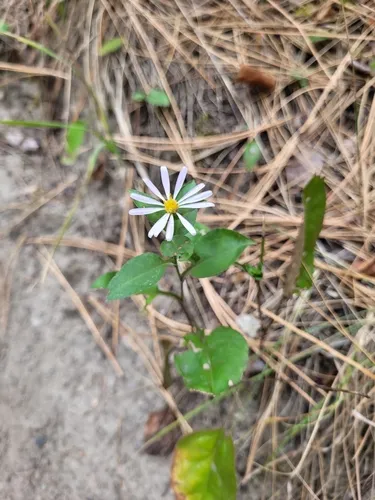
Native
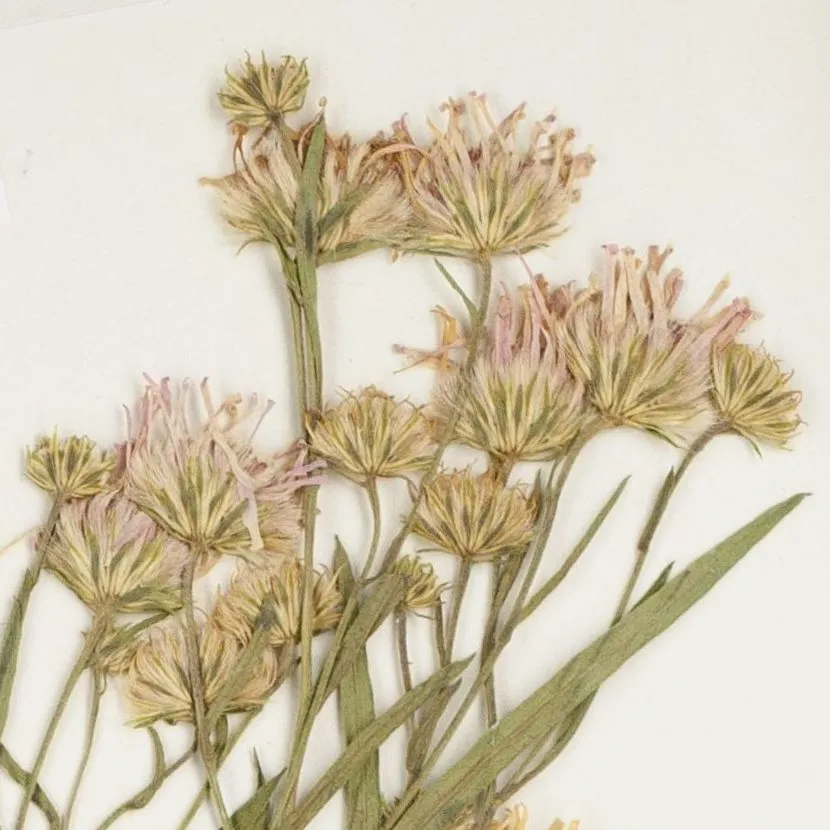
Alpine Leafybract Aster
Symphyotrichum foliaceum
●●●●● 
Native
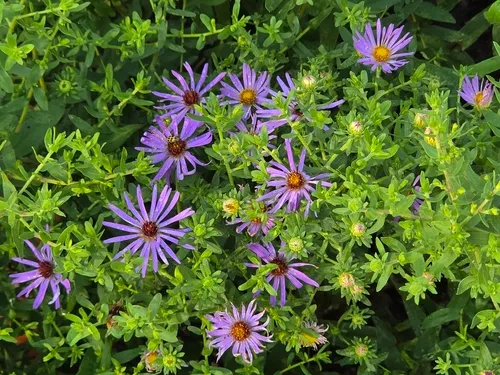
Anticosti Island Aster
Symphyotrichum anticostense
●●●●● 
Native
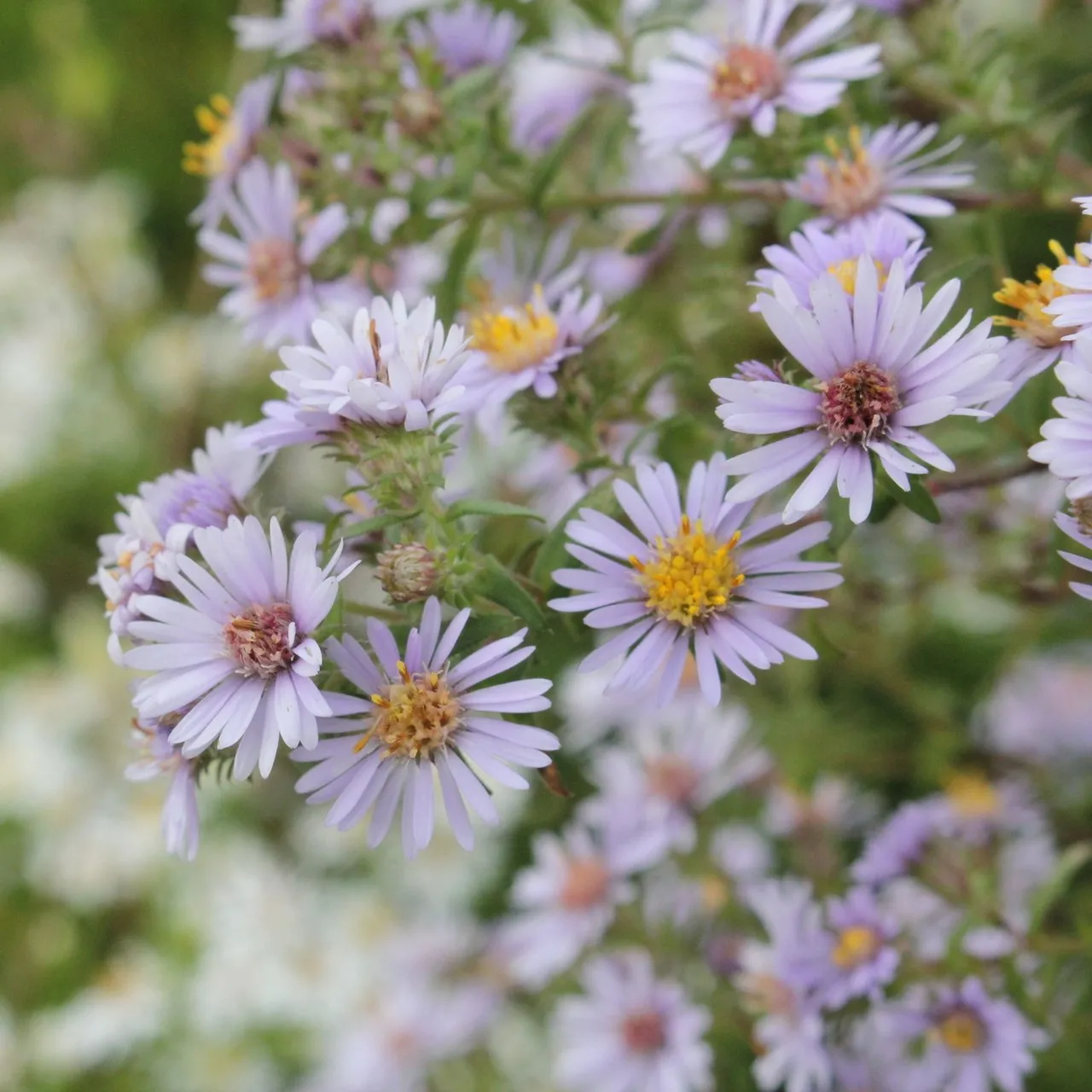
Aromatic Aster
Symphyotrichum oblongifolium
●●●●● 
Native
Aster
Symphyotrichum ×amethystinum
●●●●● Native
Aster
Symphyotrichum ×batesii
●●●●● Native
Aster
Symphyotrichum ×columbianum
●●●●● Same genus / family, ranked by ecological value — from the PlantKey catalog
Sources for this entry (19) Open & cited
[01] Scientific name & family — USDA PLANTS (DwCA, Zenodo 17903503)
[02] Growth habit & duration — USDA PLANTS (DwCA, Zenodo 17903503)
[03] Native status & distribution — USDA PLANTS (DwCA, Zenodo 17903503)
[04] Common name — USDA PLANTS (via GBIF)
[05] Bloom period — USDA PLANTS (DwCA, Zenodo 17903503) — BloomPeriod
[06] Height — USDA PLANTS (DwCA, Zenodo 17903503) — Height, Mature
[07] Sun / shade — USDA PLANTS (DwCA, Zenodo 17903503) — ShadeTolerance
[08] Soil & moisture — USDA PLANTS (DwCA, Zenodo 17903503) — MoistureUse / SoilPH
[09] Cold hardiness (zone) — USDA PLANTS (DwCA, Zenodo 17903503) — Temperature, Minimum °F
[10] Toxicity — USDA PLANTS (DwCA, Zenodo 17903503) — HumanLivestockToxicity
[11] Growth & form — USDA PLANTS (DwCA, Zenodo 17903503) — Growth Rate / Spread / Growth Form / Lifespan / Active Growth Period / Seed Period
[12] Soil & fertility — USDA PLANTS (DwCA, Zenodo 17903503) — Fertility Requirement / Soil Adaptation
[13] Landscape traits — USDA PLANTS (DwCA, Zenodo 17903503) — Foliage Texture / Browse Palatability / Resprout
[14] Propagation & availability — USDA PLANTS (DwCA, Zenodo 17903503) — Propagation Method / Commercial Availability
[16] Seed germination — USDA PLANTS (DwCA, Zenodo 17903503) — Germination (cold stratification)
[17] Invasive / introduced status — USDA PLANTS (DwCA, Zenodo 17903503) — native status
Spot an error or have a better photo? Every field links to its source, and the whole dataset is open.
Cite this page Open data, please attribute
PlantKey’s data is open under CC BY-SA 4.0 — free to reuse and adapt, with attribution and the same licence. Photos keep their own per-image licence + credit (see Sources above).
Citation
Loading…
BibTeX
Loading…