
© Halle Furnish · CC BY-NC
iNaturalist — CC, credited & licensed per image
Thymelaeaceae family
Hillside False Ohelo Wikstroemia uva-ursi
Native
Deer-resistant — Low palatability to browsing deer, and rated toxic — which deer tend to avoid. Usually passed over, but no plant is truly deer-proof when food is scarce.
USDA livestock toxicity rating — not a pet assessment. See the Toxicity detail further down for what's documented.
Also known as: Fish poison plant · Hillside false ʻōhelo
Hillside False Ohelo is a perennial shrub native to Hawaii. It grows to 3 ft in part shade – shade, with red fruit.
Growing & care
USDA PLANTS · TRY Conditions
Sources · Conditions
USDA PLANTS — Sun · Soil & moisture
USDA PLANTS (DwCA, Zenodo 17903503) — Fertility Requirement / Soil Adaptation — Fertility need · Adapts to
- Sun
- Part shade – shade
- Soil & moisture
- High moisture
- Fertility need
- Low
- Adapts to
- Coarse (sandy), Medium (loam)
Size & form
Sources · Size & form
USDA PLANTS (DwCA, Zenodo 17903503) — Height, Mature — Height
USDA PLANTS (DwCA, Zenodo 17903503) — Planting Density (per acre) — Spacing
USDA PLANTS (DwCA, Zenodo 17903503) — Growth Rate / Spread / Growth Form / Lifespan / Active Growth Period / Seed Period — Spread · Growth rate · Growth form · Active growth
USDA PLANTS — Lifespan
TRY Plant Trait Database (CC BY 4.0) · USDA PLANTS — Foliage
USDA PLANTS (DwCA, Zenodo 17903503) — Fruit/Seed Color / Fruit Persistence — Fruit
- Height
- 3 ft
- Spacing
- 6–12 ft apart from USDA planting density
- Spread
- Slow
- Growth rate
- Moderate
- Growth form
- Bunch
- Lifespan
- Perennial · short-lived
- Foliage
- Broadleaf · coarse texture
- Active growth
- Year-round
- Fruit
- Red
In the garden
Sources · In the garden
USDA PLANTS (DwCA, Zenodo 17903503) — Propagation Method / Commercial Availability — Propagate by · In the trade
USDA PLANTS (DwCA, Zenodo 17903503) — Germination (cold stratification) — Seed starting
USDA PLANTS — Seed Period — Seeds ripen
USDA PLANTS (DwCA, Zenodo 17903503) — Foliage Texture / Browse Palatability / Resprout — Deer browsing · Resprouts if cut
- Propagate by
- Seed, Cuttings, Container, Sprigs
- Seed starting
- No stratification needed
- Seeds ripen
- Year-round seed-collection / harvest window
- In the trade
- No known commercial source
- Deer browsing
- Low often deer-resistant
- Resprouts if cut
- Yes regrows after top-kill
Herb layer — Sits in the herb of a layered food forest or polyculture.Open guide →
derived roles When to sow · for your area
Sow timing keys off your local last- and first-frost dates.
Species characteristics from USDA PLANTS (public domain) + TRY (CC BY) — general guidance, not a
guarantee for your exact site. Deer "browsing" is documented palatability, not a deer-proof claim.
Related plants
More Wikstroemia →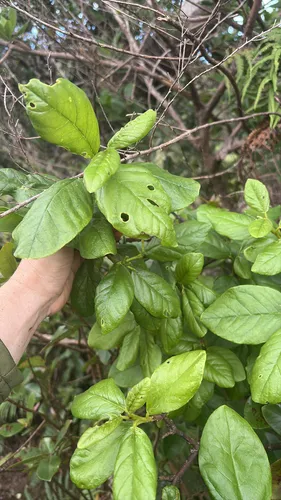
Native
Alpine False Ohelo
Wikstroemia bicornuta
●●○○○ Native
Forest False Ohelo
Wikstroemia furcata
●●○○○ 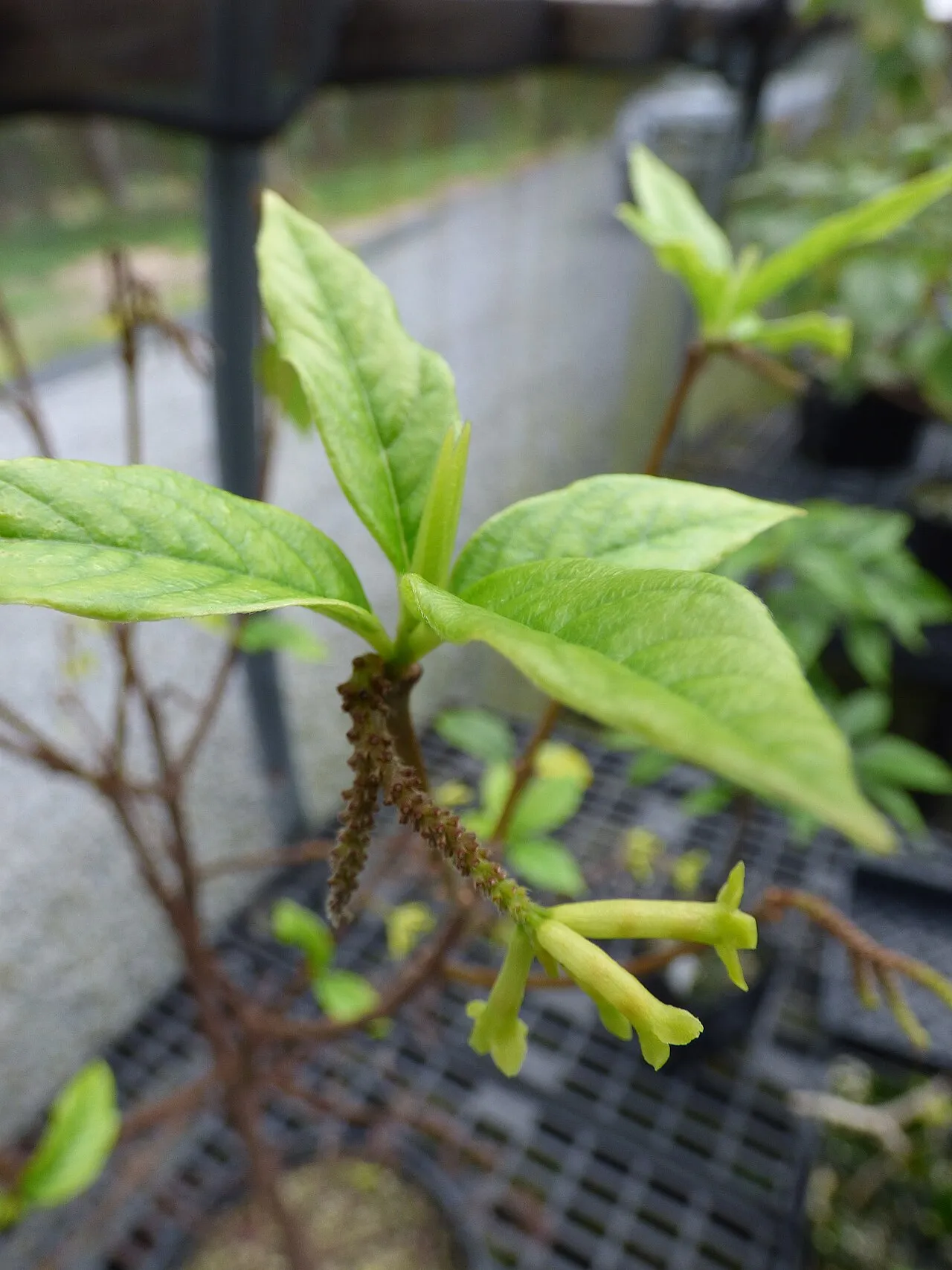
Native
Hairy False Ohelo
Wikstroemia villosa
●●○○○ 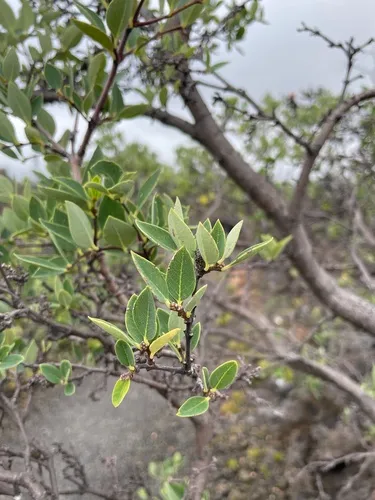
Native
Hawai'i False Ohelo
Wikstroemia phillyreifolia
●●○○○ 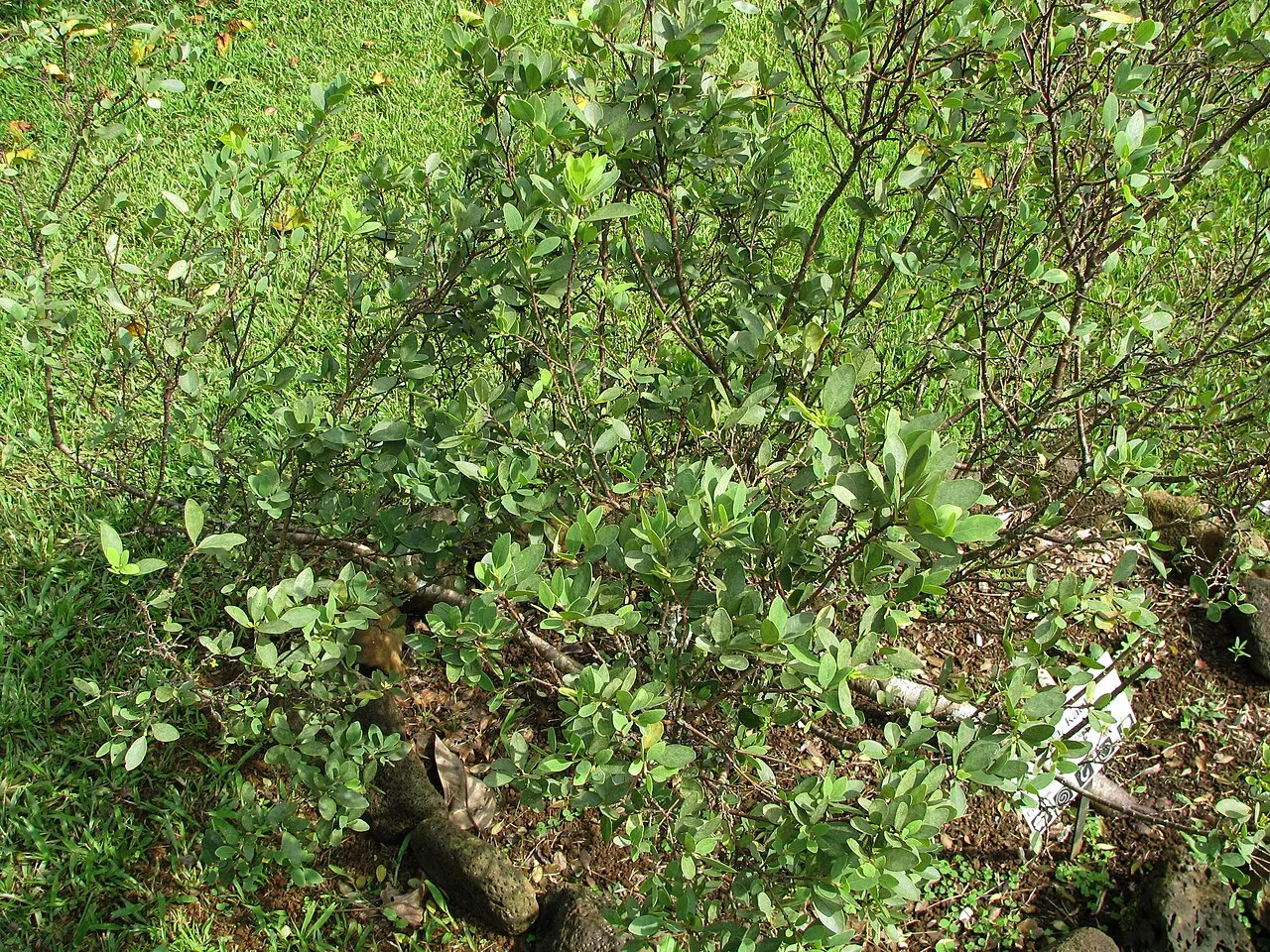
Native
Kohala False Ohelo
Wikstroemia pulcherrima
●●○○○ Native
Lavafield False Ohelo
Wikstroemia hanalei
●●○○○ Same genus / family, ranked by ecological value — from the PlantKey catalog
How we know this (1) Methods & honest limits
Photosynthesis Direct fact
A recorded categorical fact: each species is tagged C3 (standard), C4 (heat/water-efficient) or CAM (succulent, night-time CO₂ uptake) — or a facultative combination. We only show a trait card for the noteworthy C4/CAM cases; C3 is the unremarkable majority, kept in the data but not surfaced as a card.
Kattge, J. et al. TRY plant trait database — Categorical Traits Dataset (2012).
Derived values are computed from open data by a published method — labelled, cited, and never shown as a direct observation.
Full methodology →
Sources for this entry (24) Open & cited
[01] Scientific name & family — USDA PLANTS (DwCA, Zenodo 17903503)
[02] Growth habit & duration — USDA PLANTS (DwCA, Zenodo 17903503)
[03] Native status & distribution — USDA PLANTS (DwCA, Zenodo 17903503)
[04] Common name — USDA PLANTS (via GBIF)
[05] Height — USDA PLANTS (DwCA, Zenodo 17903503) — Height, Mature
[06] Sun / shade — USDA PLANTS (DwCA, Zenodo 17903503) — ShadeTolerance
[07] Soil & moisture — USDA PLANTS (DwCA, Zenodo 17903503) — MoistureUse / SoilPH
[08] Toxicity — USDA PLANTS (DwCA, Zenodo 17903503) — HumanLivestockToxicity
[09] Growth & form — USDA PLANTS (DwCA, Zenodo 17903503) — Growth Rate / Spread / Growth Form / Lifespan / Active Growth Period / Seed Period
[10] Soil & fertility — USDA PLANTS (DwCA, Zenodo 17903503) — Fertility Requirement / Soil Adaptation
[11] Landscape traits — USDA PLANTS (DwCA, Zenodo 17903503) — Foliage Texture / Browse Palatability / Resprout
[12] Propagation & availability — USDA PLANTS (DwCA, Zenodo 17903503) — Propagation Method / Commercial Availability
[14] Seed germination — USDA PLANTS (DwCA, Zenodo 17903503) — Germination (cold stratification)
[16] Invasive / introduced status — USDA PLANTS (DwCA, Zenodo 17903503) — native status
[17] Photos — iNaturalist — CC, credited per image
[18] Ecological value — GloBI
[19] Conservation rank — NatureServe Explorer (CC BY)
[20] Foliage — TRY Plant Trait Database (CC BY 4.0)
[21] Functional traits — TRY Plant Trait Database (CC BY 4.0)
[22] Photosynthetic pathway — TRY Plant Trait Database (CC BY 4.0)
[23] Other common names — Wikidata (CC0)
[24] County range — GBIF Open Data — open-licensed occurrences (CC0/CC-BY) → county
Spot an error or have a better photo? Every field links to its source, and the whole dataset is open.
Cite this page Open data, please attribute
PlantKey’s data is open under CC BY-SA 4.0 — free to reuse and adapt, with attribution and the same licence. Photos keep their own per-image licence + credit (see Sources above).
Citation
Loading…
BibTeX
Loading…